Cash vs. Accrual Accounting: Which Method Is Right for Your Business?

One of the most important financial decisions a business owner makes is how to record income and expenses. There are two methods: cash accounting and accrual accounting. Both are widely used and accepted by the ATO. But they work differently, and choosing the wrong one can make your records harder to understand and manage over time.

This article explains how each method works, where each one falls short, and how to work out which one fits your business.

What Is Cash Accounting?

Cash accounting is the simpler of the two methods. You record income when you receive a payment. You record an expense when you make a payment. Nothing is recorded until money actually changes hands. Think of it like tracking a personal bank account. Money comes in, you note it. Money goes out, you note it. There are no invoices sitting in the middle waiting to be counted.

Example: You finish a project in March and send the invoice. Your client pays in April. With cash accounting, that income goes into April’s records, not March. Your March books show nothing for that job.

This method is straightforward and gives you a clear view of how much money you actually have at any point in time.

What Is Accrual Accounting?

Accrual accounting works differently. You record income when it is earned, not when you get paid. You record an expense when it is incurred, not when you settle the bill. The principle behind it is simple: income and expenses belong to the period they happened in, not the period the cash moved.

Example: You finish a project in March and send the invoice. Your client pays in April. With accrual accounting, that income goes into March’s records, because that is when you did the work and earned the money.

This method gives a fuller picture of your business at any given time. It captures what you are owed and what you owe, even when no cash has moved yet.

The Key Difference

Both methods come down to one question: when does a transaction get recorded?

With cash accounting, it is recorded when cash changes hands. With accrual accounting, it is recorded when the transaction occurs, whether or not money has moved. This timing difference sounds minor, but over the course of a month or a full financial year, it can produce very different financial statements from the same business activity.

Side by Side Comparison

Features Cash Accounting Accrual Accounting
Income recorded When cash is received When work is done or sale is made
Expenses recorded When cash is paid When bill is received
Tracks accounts receivable No Yes
Tracks accounts payable No Yes
Complexity Low Higher
Best suited to Small, simple businesses Growing or invoice-based businesses
Preferred by lenders and investors Less common Widely preferred

Cash Accounting: Benefits and Limitations

Benefits

  • Simple to manage. There is no need to track unpaid invoices or outstanding bills. You record what comes in and what goes out. Most small business owners can manage this without specialist software or a dedicated bookkeeper.
  • You always know your cash position. Because your records closely match your bank activity, you can see exactly how much money you have available at any time. There is no gap between what your books say and what you can spend.
  • Lower cost to run. Cash-based records take less time to maintain and often do not require professional help to keep up to date. For a sole trader or small operator, this can make a real difference to overheads.
  • Simpler end-of-year reporting. Because you only record money you have actually received, pulling your year-end figures together is more straightforward.

Limitations

  • It can give a misleading picture of performance. If you complete a lot of work in one month but clients pay the following month, your records will not reflect the activity accurately. A productive month can look flat on paper, while a quieter month can look strong simply because old invoices were settled. This can make it difficult to spot real trends in your business.
  • Not suitable for every business model. If you offer credit to customers, carry stock, or deal with deferred payments regularly, cash accounting does not capture the full picture of what is owed or owned at any point in time.
  • Harder to plan ahead. Because you can only see what has already come in, forecasting becomes less reliable. If you are thinking about how to build a business budget that actually holds , this is worth factoring into your decision.

Accrual Accounting: Benefits and Limitations

Benefits

  • More accurate financial reports. Income and expenses are matched to the periods they belong to. Your monthly reports reflect what actually happened during that period, not just what got paid. This makes it easier to compare performance across months and years.
  • Better for planning and decision-making. Because you can see what you are owed and what you owe at any time, you have a more reliable base for planning spending, managing growth, and identifying issues early.
  • Preferred by banks and investors. When you apply for a business loan or present financials to outside parties, accrual-based statements carry more weight. They give a clearer and more credible view of financial health. Understanding what financial statements lenders typically review can help you prepare if that is something you are working towards.
  • Grows with your business. As your transactions become more varied and complex, accrual accounting handles them more cleanly. It is built to scale in a way that cash accounting is not.

Limitations

  • More work to maintain. You need to track accounts receivable and accounts payable on an ongoing basis. This takes more time and generally requires accounting software and, in most cases, a bookkeeper or accountant.
  • Profit and cash can look very different. You might report strong earnings while having little cash available, particularly if clients are slow to pay. This is normal under accrual accounting, but it means you need to track cash flow separately from your profit figures. Knowing the difference between profit and cash flow in your business becomes important here.
  • Higher running costs. The added complexity usually means you need professional support to manage it properly. That is an ongoing cost to factor into your decision.

Which Businesses Tend to Use Each Method?

Cash accounting works well for:

  • Sole traders and freelancers
  • Small service-based businesses that get paid at the time of work
  • Retail and hospitality businesses with simple, high-volume transactions
  • New businesses in the early stages of trading
  • Businesses with low transaction volumes and no outstanding invoices

Accrual accounting works well for:

  • Businesses that invoice clients and offer payment terms
  • Businesses that carry stock or inventory
  • Businesses with staff and regular payroll obligations
  • Businesses planning to apply for funding or seek investment
  • Businesses with more complex or varied transactions

The right method is not always about size. A small business that sends a lot of invoices and regularly waits 30 to 60 days for payment may benefit from accrual accounting long before turnover reaches a level that requires it.

What the ATO Requires

In Australia, businesses with a GST turnover under $10 million can generally choose either method for BAS reporting. Businesses above $10 million are required to use accrual accounting.

It is also possible to use different methods for different purposes. Some businesses use cash reporting for GST while maintaining accrual-based accounts internally. The rules around this depend on your business structure. Speaking with an accountant is the most reliable way to confirm what applies to you.

Common Mistakes to Watch Out For

  • Mixing methods without realising it. Applying cash accounting to some transactions and accrual to others creates inconsistencies that are difficult to fix later. Whichever method you choose, apply it consistently across all transactions.
  • Confusing profit with available cash. This comes up most often with accrual accounting. Your reports may show solid earnings while your bank balance is low because payments are still outstanding. Monitoring both figures separately is important.
  • Switching methods without planning. Changing from one method to the other mid-year, without carefully accounting for existing invoices and bills, can result in transactions being counted twice or missed. The best time to switch is at the start of a new financial year, with support from an accountant who can manage the adjustments.
  • Leaving the decision too late. Setting up your accounting method after you have already started trading creates extra work to correct your records. It is much easier to choose the right method from the start, particularly when you are still setting up your business finances for the first time.

Making the Right Call for Your Business

Cash and accrual accounting are both workable approaches. Neither is right for every business. The best choice depends on how your business operates, how you get paid, and what you need your financial records to tell you.

If your business is small, simple, and mostly paid upfront, cash accounting is a practical choice that keeps things manageable. If you invoice clients, carry stock, employ staff, or need detailed financial reports, accrual accounting will give you a more reliable view of how your business is actually going.

At Elite Plus Accounting, we work with businesses of all sizes across Australia. If you are unsure which method suits your situation, our team can review your setup and help you put the right foundations in place.


Frequently Asked Questions

What is the main difference between cash and accrual accounting?
Cash accounting records a transaction when money physically moves. Accrual accounting records it when the transaction occurs, meaning when income is earned or an expense is incurred, regardless of when payment happens.
Cash accounting is simpler. It requires less record-keeping and is easier to run without specialist software or a bookkeeper. Accrual accounting takes more ongoing effort but gives a more complete financial picture.
Because income is recorded when it is earned, not when it is paid. If you have unpaid invoices, your reported income includes money you have not yet received. This is normal under accrual accounting, but it means cash flow needs to be tracked separately from your profit figures.
It can work in the early stages, but as transaction volume grows and complexity increases, cash accounting becomes harder to rely on for planning and reporting. Most growing businesses benefit from moving to accrual accounting before that complexity makes the switch harder to manage.
Your financial records will be inconsistent, which makes statements unreliable and can cause issues with BAS reporting and year-end figures. An accountant can help identify where the inconsistencies are and get things back on track.

Financial Habits for Stress-Free Australian Business Owners

Running a business in Australia is rewarding. But it can also be really stressful, especially when it comes to money. Most business owners are great at what they do. They know their product. They know their customers. But when it comes to their finances, things get messy fast. Bills pile up. Lodgement deadlines sneak up. And suddenly there is not enough cash to cover the basics.

A lot of it comes down to habits. Not big complicated systems, just small consistent actions that keep you aware of what is going on with your money throughout the year. Here are some that actually make a difference.

Separate Your Personal and Business Money

This one sounds obvious. But a lot of small business owners skip it, especially in the early days. When you mix personal and business money in the same account, everything gets confusing. You do not know how your business is actually performing. And if the ATO ever audits you, it becomes a real headache.

Open a dedicated business bank account. Keep all business income going in there and pay all business expenses from there. Once you do this, everything becomes clearer. You can actually see what your business is making and spending, and so can your accountant, which saves time and money when they are working on your books.

Set a Weekly or Fortnightly Finance Check-in

You do not need to look at your numbers every single day. But ignoring them for months is how problems quietly grow into big ones. Here is what a simple check-in looks like:

  • Look at your current bank balance
  • Check which invoices are still outstanding
  • See if any bills or payments are due in the next two weeks
  • Note anything that looks off or unexpected

It should not take more than 20 to 30 minutes. It is not about doing your accounting. It is about staying aware so that nothing catches you off guard.

Pay Yourself Properly

This is something a lot of Australian business owners get wrong, and it quietly creates a lot of stress. Many owners either pay themselves whatever is left over at the end of the month, or they dip into the business account whenever they need something personally. Neither approach works well.

A better habit is to treat your own pay like a fixed business expense. Decide on a consistent amount that covers your actual living costs and move it across on a regular schedule. It does not have to be perfect from day one, but having some structure around it makes a real difference to how in control you feel, both in the business and at home.

Understand the Difference Between Profit and Cash Flow

A lot of business owners assume that if they are making sales, the money is there. But profit on paper and actual cash in the bank are two different things. You can have a solid month of revenue and still not be able to cover your expenses if clients have not paid yet or if a big bill lands at the wrong time.

Cash flow is about timing. Keeping an eye on when money comes in versus when it goes out helps you spot potential shortfalls before they happen. Even a basic sense of what your cash position looks like a few weeks ahead can change how you manage your spending day to day.

Get a Handle on GST Early

A lot of Australian business owners register for GST and then kind of forget about it until the BAS is due. Then they panic because they do not have the money set aside. Here is a habit that works well: every time a payment comes in, set aside 10% straight away. Move it to a separate account or at least tag it mentally. That money is not yours. It belongs to the ATO.

If you do this consistently, BAS time becomes much less stressful. You already have the money sitting there. No scrambling. No stress. If you are unsure whether you are handling GST correctly, talking to someone who understands business accounting obligations in Australia can help you get it sorted and put a proper system in place.

Know Your Numbers, Even the Basic Ones

You do not need to be an accountant. But you do need to know a few key numbers in your business. Here is what to keep an eye on at a minimum:

  • How much money came in this month
  • How much went out
  • What your biggest expenses are
  • Whether you made a profit or a loss

A lot of business owners avoid this because they are scared of what they might find. But knowing a bad number is always better than not knowing. If you are using accounting software like Xero or MYOB, most of this is already there. You just need to check it. Even a basic profit and loss report once a month can tell you a lot.

Plan Ahead for Your ATO Obligations

A lot of business owners only think about their ATO obligations once a year, right before everything is due. That is when the stress hits hardest. The better approach is to keep it in mind throughout the year. Here is what that actually looks like in practice:

  • Keep your receipts organised as you go
  • Know which expenses are deductible in your industry
  • Set aside a rough percentage of your profit each month to cover what you will owe
  • Check in with your accountant once or twice during the year, not just at the end

Being organised is really all it takes. A good starting point is understanding what your business structure means for your obligations. The team at Elite Plus Accounting works with business owners year-round, not just at lodgement time, which makes staying on top of this a lot easier.

Keep Your Records Clean and Current

Messy records are one of the biggest sources of financial stress for business owners. When receipts are everywhere, invoices are lost, and transactions are not categorised, it takes so much longer to do anything. The fix is simpler than most people think:

  • Take a photo of every receipt straight away and store it digitally
  • Match bank transactions in your accounting software each week
  • Send invoices promptly and follow up on late ones

When your records are clean, your accountant can work faster and more accurately. That usually means lower fees and fewer errors. And if anything ever comes up with the ATO, you have everything ready to go.

Build a Buffer for Slow Months

Business income goes up and down. That is normal. But it becomes a problem when a slow month means you cannot cover your basic costs like rent, subscriptions, wages, or loan repayments. A cash buffer is a small savings reserve in your business account, enough to cover one to two months of fixed expenses.

Building it takes time. Start by putting away a small amount each week, even if it is just a few hundred dollars. Over time it adds up. When a slow month hits, and it will at some point, you have breathing room to focus on getting things moving again instead of panicking.

Do Not Try to Do Everything Yourself

This is a trap a lot of business owners fall into, especially when they are watching costs carefully. Handling your own bookkeeping, BAS, payroll, and everything else sounds like a money saver. But it often costs more in the long run. Here is why:

  • Mistakes in your records can take hours to untangle later
  • You may miss deductions you did not know you were entitled to
  • The time you spend on admin is time away from actual work
  • Getting behind creates stress that spills into everything else

Getting support from a good accountant or bookkeeper does not mean handing over control. It means having someone who helps you make better decisions. If you are wondering what that kind of support actually looks like in practice, bookkeeping and accounting services for Australian businesses can cover a lot more than most people realise.

Review Your Prices at Least Once a Year

Costs go up. Wages go up. Suppliers charge more. And yet some business owners keep the same prices for years without reviewing them. If your costs have gone up but your prices have not, your margins are quietly shrinking.

Once a year, sit down and look at what your expenses cost now compared to a year ago. Then look at your prices. Even a modest increase, if your product or service justifies it, can make a meaningful difference to your bottom line over the course of a year.

Talk to Your Accountant More Than Once a Year

Most small business owners only talk to their accountant around lodgement time. That is a missed opportunity. A good accountant can help with more than just the numbers at year end. They can:

  • Flag cash flow issues before they become serious
  • Help you understand what your financials are actually telling you
  • Give you useful input when you are making decisions about hiring, spending, or restructuring
  • Keep you informed of any changes that affect your business

You do not need to call them every week. But checking in two or three times a year, or keeping them in the loop when something big changes, can make a real difference to how confident you feel about your finances.

The Real Goal Is Peace of Mind

Financial stress affects everything. It affects your sleep, your relationships, how you show up for your team, and how you feel about your business overall. These habits are not about becoming a financial expert. They are about removing the chaos. When your finances are organised and you know what is going on, the stress goes down and you make better decisions.

None of these habits are difficult. But most of them take consistency. Start with one or two. Build from there. Give it a few months and you will likely notice a real shift.

From Overwhelmed to In Control

If you are a business owner who has been putting off dealing with your finances because it all feels too hard, you are not alone. It is one of the most common things business owners talk about. But avoiding it only makes it worse. The pile gets bigger. The stress gets heavier. And eventually it forces its way into your focus anyway, usually at the worst possible time.

Starting small is fine. You do not need to fix everything at once. Pick one habit from this list and try it for a month. See what changes. Then add another one. Over time, these small things stack up into something solid, and that is what allows you to actually enjoy running your business again, instead of just surviving it.

Frequently Asked Questions

How often should a small business owner look at their finances?
Once a week or fortnight is enough for most people. A quick check of your bank balance, outstanding invoices, and upcoming bills takes 20 to 30 minutes and keeps you across what is going on.
Yes. Mixing personal and business money makes it hard to see how your business is actually performing. It also creates more work for your accountant and more hassle if the ATO ever has questions.
Work out what you actually need each month to cover your personal living costs and use that as your baseline. If your business cannot sustain that consistently yet, an accountant can help you figure out how to structure your drawings in a way that works.
As soon as you start earning income from your business. Getting support early means fewer mistakes, better habits from the start, and someone to call when you are not sure what to do.
Xero and MYOB are the most widely used options in Australia. Both connect to your bank and make BAS reporting easier. Which one suits you usually comes down to your business size and what your accountant prefers.

Payday Super 2026: Step-by-Step Melbourne Setup and Compliance Checklist

From 1 July 2026, every business in Australia must pay superannuation on each payday. This replaces the current system where employers pay super once every three months. The change affects how payroll is processed, how cash flow is managed, and what records need to be kept. Employers who understand the new requirements and prepare their systems in advance will be in a better position to meet their obligations from day one.

This guide explains what needs to be set up before 1 July 2026 and includes a compliance checklist that Melbourne employers can use to confirm they are ready.

What Payday Super Requires Your Payroll System to Do

Before working through the setup steps, it is useful to understand what the new rules actually require.

Under Payday Super, your payroll system needs to complete three tasks on every pay run:

  1. Calculate the correct super amount for each employee
  2. Send that super to the right fund on time
  3. Keep a record of every payment for ATO reporting

Right now, most Melbourne businesses do this four times a year. From 1 July 2026, it happens every week, fortnight, or month, depending on your pay cycle. That means your systems need to handle a much higher volume of super transactions. Reviewing and updating your payroll setup before the deadline gives you time to identify and resolve any issues.

Step 1: Audit Your Current Payroll System

Start by looking at what you already have.

Ask yourself these questions:

  • What payroll software do you use?
  • Does it connect to SuperStream or a super clearing house?
  • Is it cloud-based or desktop?
  • How often is it updated?

Why this matters: Older or manual payroll setups will not cope with Payday Super. If your current system cannot automate super payments, you will need to upgrade before 1 July 2026.

What to do: Contact your payroll provider. Ask them directly: “Will you be ready for Payday Super from 1 July 2026?” Get the answer in writing if you can.

Most major platforms like Xero, MYOB, and QuickBooks Online are actively preparing updates. But you still need to confirm your specific version is covered.

Step 2: Enable SuperStream or Set Up a Clearing House

SuperStream is the system employers use to send super contributions to funds electronically. It is already the standard method in Australia. But you need to make sure it is correctly set up for more frequent payments.

  • If you already use SuperStream: Check that your clearing house can handle weekly or fortnightly transactions. Some older clearing house setups were built around quarterly batches. You may need to adjust processing settings.
  • If you use the ATO Small Business Clearing House (SBSCH): Log into the Business Portal and check your account settings. The ATO is updating the SBSCH for Payday Super. Make sure your contact details and bank account are current.
  • If you do not use SuperStream yet: Set it up now. It is free through the ATO for businesses with 19 or fewer employees. Larger businesses will need a commercial clearing house. Your payroll software provider can guide you through this.

Step 3: Collect and Verify All Employee Super Fund Details

Accurate super fund details are required for every employee before Payday Super payments can be processed correctly.

For every employee, you need four pieces of information:

  • The name of their super fund
  • The fund’s Unique Superannuation Identifier (USI)
  • The employee’s member number
  • The fund’s bank account details (for SuperStream payments)

How to collect this information:

Ask employees to complete a Superannuation Standard Choice Form. This is the official ATO form employees use to nominate their fund. If an employee does not choose a fund, you must check their stapled fund through the ATO. A stapled fund is an existing fund already linked to that employee from a previous job.

How to verify the details are correct:

Cross-check each USI against the Australian Taxation Office’s Super Fund Lookup tool. This is a free online tool at superfundlookup.gov.au. It confirms whether a fund is active and registered. Incorrect fund details will result in rejected payments. Rejected payments can result in non-compliance with the new rules.

Step 4: Update Your Payroll Software Settings

Once your fund details are verified, enter them into your payroll software. Here is how to approach this step:

  • Go to each employee profile in your payroll system
  • Update the super fund name, USI, and member number
  • Check that the contribution rate is set correctly (11.5% for 2025-26, rising to 12% from 1 July 2026)
  • Set the payment frequency to match your pay cycle

Test the data before it goes live. Run a dummy pay cycle in your software if your system allows it. Check that super calculations are correct for a range of employees. Identifying errors before the go-live date is easier than correcting them after.

Step 5: Adjust Your Cash Flow Plan

Payday Super changes how much cash you need available every pay run. Before, you held that money in your business account for up to three months before sending it out. From July 2026, it needs to go out much sooner.

Here is a simple way to plan for this:

  1. Look at your total quarterly super bill from last year
  2. Divide it by the number of pay runs you had in that quarter
  3. That figure is roughly how much extra cash you need on each payday

For example, if you paid $18,000 in super over a quarter with 6 fortnightly pay runs, that is about $3,000 per pay run. Make sure your business bank account holds that amount before each payroll date. If managing cash flow is a challenge, an accountant or bookkeeper can help you model what the per-pay-run super liability looks like across the financial year.

Step 6: Train Your Payroll Team

If someone else runs payroll in your business, they need to know what is changing.

Train them on the following:

  • The new payment timing rules
  • How to process super through your updated system
  • What to do if a payment is rejected by a super fund
  • How to keep payment records for ATO reporting

If you use an external bookkeeper or payroll service, confirm they are already prepared for Payday Super. Ask what changes they are making to their own processes.

Step 7: Run a Test Pay Cycle Before 1 July 2026

Do a full dry run before the new rules kick in. Process a pay cycle in your updated system exactly as you will from July 2026 onward.

Check the following:

  • Are super amounts calculated correctly?
  • Does the payment go through SuperStream without errors?
  • Is the timing right (super sent on the same day as wages)?
  • Are records created automatically for ATO reporting?

Completing a test run in May or June 2026 allows enough time to identify and resolve any issues before the new rules take effect.

Payday Super Compliance Checklist for Melbourne Employers

Use this checklist to confirm you are ready before 1 July 2026.

Payroll System

  • Confirmed payroll software will be updated for Payday Super
  • Software is cloud-based or on the latest version
  • Auto super calculation is turned on
  • Payment frequency matches your pay cycle

SuperStream and Clearing House

  • SuperStream is active and connected to your payroll software
  • Clearing house can process weekly or fortnightly transactions
  • Bank account linked to clearing house is correct and current
  • ATO Business Portal access is confirmed (for SBSCH users)

Employee Super Fund Details

  • All employees have submitted a Superannuation Standard Choice Form
  • Stapled fund checked for any employee who did not nominate a fund
  • All fund names, USIs, and member numbers entered into payroll system
  • All fund details verified through Super Fund Lookup (superfundlookup.gov.au)

Contribution Rate

  • Super rate updated to 12% from 1 July 2026
  • Ordinary Time Earnings calculated correctly per employee

Cash Flow

  • Per-pay-run super liability calculated
  • Business account has sufficient funds on each payroll date
  • Cash flow plan reviewed with accountant or bookkeeper

Record Keeping

  • System creates automatic payment records for each super transaction
  • Records include employee name, fund, amount, and payment date
  • Records are stored in a secure, accessible location

Testing

  • Test pay cycle completed in updated system
  • No errors in super calculation or payment processing
  • Payroll team trained on new process

Professional Support

  • Accountant or payroll advisor has reviewed your setup
  • Contact details for your super clearing house are saved
  • ATO contact details on hand in case of disputes

What Happens on Your First Payday After 1 July 2026?

On your first payday under the new rules, run payroll as normal. But now, the super payment should go out at the same time as wages. Your updated payroll software should trigger this automatically if set up correctly.

After the pay run, check that the super payment has been sent. Log into your clearing house account and confirm the transaction is processing. Keep a copy of the confirmation for your records. If a payment is rejected (due to wrong fund details, for example), fix it immediately. The ATO expects timely payments. Delays, even short ones, can attract penalties under the new rules.

When Professional Support May Be Useful

Some payroll situations are more straightforward to prepare than others. In cases where the setup is more complex, working with a payroll professional or accountant can help ensure the transition is handled correctly.

Situations where professional guidance is commonly needed include:

  • Payroll software that is outdated or not connected to SuperStream
  • Employees with incomplete or unverified super fund details
  • Businesses with multiple pay cycles or varied employment arrangements
  • Cash flow structures that need adjusting to accommodate more frequent super payments

An accountant or registered bookkeeper can review your current payroll setup, help update employee fund details, and confirm that your system meets the ATO’s requirements before 1 July 2026.

Frequently Asked Questions

Do I need new payroll software for Payday Super?
Not necessarily. Most major payroll platforms are being updated to handle the new rules. But you do need to confirm your current software will support automated Payday Super payments. If your software is outdated or no longer supported, now is a good time to upgrade.
Yes. Under Payday Super, the super payment cycle matches your pay cycle. If you pay wages every fortnight, super must also go out every fortnight.
Yes. The ATO Small Business Clearing House will be updated to support Payday Super for eligible businesses. Make sure your account is active and your settings are current before 1 July 2026.
The Superannuation Guarantee rate increases to 12% from 1 July 2026. This applies to all eligible employees. Make sure this is updated in your payroll software before the first pay run under the new rules.
Use the Super Fund Lookup tool at superfundlookup.gov.au. It is free and operated by the ATO. Simply search by fund name or USI and the tool will confirm whether the fund is regulated and accepting contributions.

Melbourne Business Setup 2026: ABN, ASIC & Trust Guide

Setting up a business in Melbourne takes more than just a good idea. There are registrations to complete, structures to choose, and legal steps to follow before you can start trading.

This guide explains the key steps involved in starting a business in Melbourne in 2026. It covers what an ABN is, how to register a company with ASIC, and how trust structures work. It is written in plain language so anyone can understand it. Whether you are just starting out or restructuring an existing business, this guide gives you a clear picture of what is involved.

Why Your Business Structure Matters

Before you register anything, you need to choose a business structure. This is one of the most important decisions you will make as a business owner.

Your structure determines:

  • Who is legally responsible for the business and its debts
  • How profits are distributed among owners or partners
  • What reporting and compliance obligations you have
  • How easy it is to bring in new investors or partners later

Changing your structure after you have already started can be costly and time-consuming. Getting the right advice before you register is the best way to avoid problems down the road.

What Is an ABN?

An ABN (Australian Business Number) is an 11-digit number issued by the Australian Government. It is used to identify your business when dealing with other businesses and government agencies.

Why You Need an ABN

  • It allows you to issue invoices and get paid as a business
  • It is required to register for GST
  • It helps you avoid PAYG withholding on payments received
  • It is needed when opening a business bank account or signing commercial contracts

How to Apply for an ABN                       

Step 1: Choose your business structure before applying. Your ABN will be linked to that structure.

Step 2: Gather your personal identification details and your TFN.

Step 3: Apply through the Australian Business Register (ABR) at abr.gov.au. The application is free and most are processed within a few minutes.

ABN applications must be accurate. Mistakes can cause delays or rejection. A business setup professional can handle the process on your behalf to make sure everything is correct from the start.

Registering a Company with ASIC

ASIC (Australian Securities and Investments Commission) is the government body that regulates companies in Australia. If you choose to operate as a company, you must register with ASIC.

What Is a Company?

A company is a separate legal entity from its owners. This means:

  • The company can enter contracts, own property, and take on debt in its own name
  • Directors and shareholders are generally not personally liable for company debts
  • The company continues to exist even if ownership changes

This separation of personal and business liability is one of the main reasons people choose to operate as a company.

How to Register a Company with ASIC in 2026

Step 1: Choose a company name and check its availability on the ASIC register.

Step 2: Decide on your directors and shareholders. You must have at least one Australian resident director.

Step 3: Choose whether to use a company constitution or rely on the replaceable rules under the Corporations Act 2001.

Step 4: Submit your application through ASIC Connect or through a registered agent.

Step 5: Pay the ASIC registration fee. This fee is charged annually and must be renewed each year.

Step 6: Receive your ACN (Australian Company Number). This is your company’s unique identifier.

Step 7: Apply for an ABN for the company. The company is a separate entity, so it needs its own ABN.

Ongoing ASIC Obligations

Once registered, a company has ongoing obligations. These include paying the annual review fee, keeping company details up to date, and lodging certain documents when changes occur. Staying on top of these requirements helps you avoid penalties.

Understanding Trust Structures

A trust is a legal arrangement where one party (the trustee) holds and manages assets on behalf of others (the beneficiaries). Trusts are commonly used in Australia for asset protection and flexible income distribution.

Types of Business Trusts

Discretionary (Family) Trust The trustee has full discretion over how income is distributed among beneficiaries each year. This flexibility makes it a popular choice for family-run businesses. The trustee is not required to distribute income equally or consistently.

Unit Trust Beneficiaries hold a fixed number of units, similar to shares in a company. Income and capital are distributed in proportion to unit holdings. This structure is well suited to joint ventures where ownership percentages need to be clearly defined.

Hybrid Trust A combination of discretionary and unit trust features. It offers some flexibility while still providing fixed entitlements for certain beneficiaries.

How to Set Up a Trust in Melbourne

Step 1: Decide which type of trust suits your goals. Consider asset protection, income distribution needs, and future growth plans.

Step 2: Appoint a trustee. This can be an individual or a company. A corporate trustee (a company set up specifically to act as trustee) is often recommended for added protection.

Step 3: Prepare a trust deed. This is the legal document that governs how the trust operates. It sets out the rules for distributions, trustee powers, and beneficiary entitlements.

Step 4: Check whether stamp duty applies to the trust deed in Victoria. Requirements can change, so confirm current obligations with your adviser.

Step 5: Apply for an ABN for the trust. The trust is treated as a separate entity.

Step 6: Open a dedicated bank account in the name of the trust.

Important Considerations

Trusts require annual administration. The trustee must make formal distribution decisions each financial year and keep proper records. Anyone considering a trust structure should seek professional advice before proceeding, as the setup and ongoing management can be complex.

Comparing Business Structures Side by Side

Structure Legal Liability Ownership Complexity Best Suited For
Sole Trader Personal Individual Low Freelancers, solo operators
Partnership Shared personal Two or more people Low to medium Small co-founded businesses
Company Limited Shareholders Medium to high Growth-focused businesses
Trust Varies Trustee holds for beneficiaries Medium to high Asset protection, income distribution

Each structure has trade-offs. The right choice depends on your goals, the size of your business, and how many people are involved.

What to Do After You Register

Registering your business is just the first step. Once your structure is in place, there are several important things to set up to keep your business running properly.

Register for GST

If your annual turnover is expected to reach $75,000 or more, you must register for GST. Some businesses with lower turnover may also choose to register voluntarily depending on their industry.

Set Up Accounting Software

Accounting software helps you track income, manage expenses, and stay on top of your finances. Xero is one of the most widely used platforms for small businesses in Australia. It connects directly to your bank, automates many processes, and makes reporting straightforward.

Setting up the software correctly from the start saves significant time and reduces errors later. This includes configuring your chart of accounts, setting up bank feeds, and creating report templates suited to your business.

Manage Payroll

If you have employees, you are required to process payroll in line with Australian workplace laws. This includes managing superannuation contributions and reporting to the ATO through Single Touch Payroll (STP). From July 2026, new Payday Super rules will also require super to be paid on each payday rather than quarterly.

Lodge BAS Statements

Businesses registered for GST must lodge Business Activity Statements (BAS). These statements report GST collected and paid. Lodging on time is important to avoid penalties.

Understanding Your Compliance Calendar

One of the most common challenges for new business owners is keeping up with compliance deadlines. Missing lodgements or payments can result in penalties and interest charges.

Here is an overview of key compliance dates and obligations to be aware of in 2026:

BAS Lodgement

If you are registered for GST, you must lodge a Business Activity Statement (BAS) either monthly or quarterly. The due date depends on your lodgement cycle and whether you lodge through a registered agent. Registered agents often receive extended deadlines.

Superannuation Contributions

Employers must pay superannuation for eligible employees. Currently, contributions are made quarterly. From 1 July 2026, the new Payday Super rules will require super to be paid every time you run payroll. This is a significant change that businesses need to prepare for now.

ASIC Annual Review

Companies receive an annual review notice from ASIC each year. This is a reminder to confirm your company details are up to date and to pay the annual review fee. Ignoring this notice can lead to your company being deregistered.

Single Touch Payroll (STP)

If you have employees, you must report payroll information to the ATO through STP every time you process a pay run. This is a real-time reporting obligation and cannot be done retrospectively without consequences.

Staying organised and knowing your deadlines in advance makes compliance much less stressful. Many businesses use accounting software to set reminders and automate parts of this process.

Your Melbourne Business Journey Starts Here

Setting up a business in Melbourne in 2026 involves real decisions that have a lasting impact. From picking the right structure to staying on top of ASIC obligations and compliance deadlines, getting the foundations right from the start saves you a lot of trouble down the track. Take the time to understand your options before you register, keep your records clean from day one, and do not be afraid to ask for help when you need it.

If you would like guidance specific to your situation, Elite Plus Accounting works with Melbourne small businesses at every stage of the setup process.

Frequently Asked Questions

Do I need an ABN before I start trading?
Yes. You should have an ABN in place before you issue any invoices or enter into business agreements. Applying is free and most applications are processed quickly through the ABR.
As of 2026, the annual ASIC fee for a proprietary limited company is approximately $597. This is separate from any professional fees for assistance with registration.
An ABN is often issued within minutes. ASIC company registration typically takes 1 to 2 business days when all documents are in order. A trust deed can take a few additional days depending on its complexity.
Xero is the most widely used platform among small businesses in Australia. It integrates well with most banks and offers a range of features suited to businesses of different sizes. A certified Xero adviser can set it up and configure it correctly for your specific needs.
You are required to keep financial records for a minimum of five years. This includes invoices, receipts, bank statements, and payroll records. Good record keeping from the start avoids issues later and makes reporting straightforward.

Construction Bookkeeping: Simple Advice for Contractors and Builders

Running a construction business means dealing with a lot of moving parts. Jobs, people, materials, payments, all happening at the same time. When the bookkeeping is not in order, it becomes very hard to know where the money is going or whether the business is actually making money.

This guide covers the key bookkeeping areas every contractor and builder should understand. Each section is straightforward and practical.

1. Track Job Costs for Every Project

Job costing means recording all the money spent and earned on each individual project. Without this, there is no clear way to know if a job was profitable. The business overall might look fine, but individual jobs could be losing money without anyone noticing.

Every expense linked to a project should be recorded against that job:

  • Materials and supplies
  • Labour costs
  • Equipment hire
  • Subcontractor fees

When income and costs are tracked by job, it becomes easier to see which types of work are profitable and which are not. It also leads to more accurate quoting over time.

Cost Type What It Covers Examples
Direct costs Belong to one specific job Materials, labour, subcontractors, equipment
Indirect costs Support the whole business Insurance, vehicle costs, office software

2. Keep Business and Personal Finances Separate

Mixing personal and business money is one of the most common mistakes in small construction businesses. It makes records messy and unreliable.

Keeping them separate is simple:

  • Open a dedicated business bank account
  • Use a separate card for all business spending
  • Never use business funds for personal expenses
  • Record every business transaction clearly

When the accounts are clean and separate, the true financial position of the business is much easier to see.

3. Use the Right Accounting Software

Cloud-based accounting software makes construction bookkeeping faster and more accurate. Platforms like Xero handle multiple needs in one place:

  • Job tracking and cost allocation by project
  • Progress invoicing and payment tracking
  • Payroll processing and ATO reporting
  • BAS preparation each quarter

The key is making sure the software is set up correctly from the start. Job codes, cost categories, and account structures all need to reflect how the business actually operates. A generic setup produces unreliable data. A well-configured setup produces useful, accurate information.

4. Manage Payroll Carefully

Payroll in construction is more complex than in most industries. A construction business might have full-timers, part-timers, and casuals all working at the same time. Each person could be on a different award rate with different overtime and allowance rules.

The key areas to get right each pay run:

  • Award rates for every employee classification
  • Overtime, allowances, and penalty rates where they apply
  • Superannuation in the correct amount and paid on time
  • Single Touch Payroll reported to the ATO every pay run
  • Payslips generated and kept on file for every employee

Getting payroll wrong leads to underpayments, which can result in back pay obligations and penalties.

From 1 July 2026, super must be paid on every payday under the new Payday Super rules. For businesses running weekly or fortnightly payroll, this means super goes out with every single pay run. Cash flow planning needs to account for this.

5. Track Cash Flow Regularly

Cash flow is the movement of money in and out of the business. In construction, it can be unpredictable. Large amounts go out on materials and labour before any payments come in from clients.

Tracking cash flow regularly helps avoid shortfalls:

  • Review a cash flow statement every month
  • Look at what invoices are outstanding and when they are due
  • Keep a buffer for unexpected costs or delays
  • Match payment timelines with upcoming expenses

A business can be profitable on paper but still run out of cash if the timing of payments in and out is not managed carefully.

6. Keep Records Organised

Good record keeping is essential in construction. If receipts are sitting in a bag, a glovebox, or scattered across a phone, they become hours of sorting work later.

Going digital makes this simple:

  • Use an app like Dext or Hubdoc to photograph receipts on site immediately
  • These apps upload directly to accounting software so nothing gets lost
  • Store all invoices, contracts, and payroll records digitally
  • Keep all records for at least five years

Organised records also protect the business. If the ATO ever reviews the accounts, having everything in order makes the process straightforward.

7. Work With a Professional Bookkeeper or Accountant

There comes a point in most construction businesses where managing the books alone becomes too time-consuming or complicated.

A professional bookkeeper or accountant who understands construction can help with:

  • Setting up job costing and project tracking properly
  • Keeping accounts payable and receivable on track
  • Preparing and lodging the BAS each quarter
  • Managing payroll correctly and on time
  • Producing monthly reports that show the true position of the business

Having expert support in place means the numbers are reliable. It also frees up time to focus on running the actual work.

8. Track Subcontractor Payments Closely

Subcontractor payments need to be checked before they are processed. Paying the wrong amount or missing a compliance requirement can create problems down the track.

Before paying any subcontractor invoice, check the following:

Check Why It Matters
Does the invoice match the agreed scope and rate? Avoids paying the wrong amount for the wrong work
Are approved variations included correctly? Extra work needs to be documented and billed properly
Does the subcontractor have a valid ABN? Required before any payment is made
Is the payment assigned to the right job? Keeps job costing accurate across all projects

If a subcontractor cannot provide a valid ABN, part of the payment may need to be withheld under ATO rules.

9. Monitor Overhead Costs

Overhead costs are the expenses that keep the business running regardless of how many jobs are on. Things like insurance, vehicle costs, rent, software subscriptions, and utilities. These costs are easy to overlook but they affect profitability on every project.

Good habits for managing overhead:

  • Review overhead costs at least once a quarter
  • Allocate a portion of overhead to each active project in job costing
  • Track recurring expenses so nothing is being paid for unnecessarily
  • Look for costs that have crept up over time without review

When overhead is monitored consistently, it becomes easier to price jobs correctly and protect profit margins.

10. Set Up and Track Project Budgets

Every project should start with a clear budget. This is the estimated cost of completing the job, broken down by category.

Once the budget is set, it needs to be tracked throughout the project:

  • Record all costs as they happen, including materials, labour, and subcontractors
  • Compare actual spend against the budget regularly
  • Update the budget if the scope of work changes
  • Flag any category that is trending over budget early
Budget Area What to Include
Materials All supplies and consumables for the job
Labour Employee and contractor hours at applicable rates
Equipment Hire costs or allocation of owned equipment
Overhead allocation A share of indirect business costs
Contingency A buffer for unexpected costs

Reviewing the budget weekly on active projects gives enough time to make adjustments before the overrun becomes significant.

11. Automate Routine Bookkeeping Tasks

Manual bookkeeping takes time and increases the chance of errors. Automation handles the repetitive tasks so more time can be spent on the actual work. Useful automation tools and habits for construction businesses:

  • Set up automated invoicing so progress claims go out on schedule
  • Use apps to log employee hours directly into payroll software
  • Connect bank feeds to accounting software so transactions are imported automatically
  • Set up reminders for upcoming bill payments to avoid late fees
  • Automate BAS reminders so lodgement deadlines are never missed

Even small automation improvements add up. They reduce errors, save hours each week, and keep the books more accurate without extra effort.

Two Sides of the Same Coin

Construction bookkeeping covers a lot of ground. Job costing, cash flow, payroll, subcontractor payments, overhead, budgets, and records all need to be managed consistently for the finances to stay in order. When these areas are handled properly, it is much easier to know where every job stands, collect what is owed, and keep the business running without financial surprises. If a Melbourne contractor or builder is looking to get their books in order, the team at Elite Plus Accounting is happy to help.

Frequently Asked Questions

What is job costing and why does it matter for construction businesses?

Job costing means recording all income and expenses against each individual project. It shows whether each job is actually making money. Without it, the overall business might look profitable while certain jobs are losing money. It also helps with more accurate quoting over time.

Mixing personal and business money makes records unreliable and hard to follow. A separate business bank account and business card keeps things clean, makes bookkeeping easier, and gives a clear picture of the actual financial position of the business.

In construction, weekly or fortnightly reconciliation is recommended. Leaving it too long makes errors harder to find and harder to trace back to a specific job or payment.

Construction businesses often have full-timers, part-timers, and casuals all working at the same time, each on different award rates with different entitlements. Overtime, allowances, and penalty rates all need to be calculated correctly. From 1 July 2026, super must also be paid on every payday under the new Payday Super rules.

In construction, large amounts are spent on materials and labour before payments come in from clients. If cash flow is not monitored regularly, a business can run out of cash even when jobs are going well. Regular cash flow reviews help keep spending and incoming payments properly aligned.

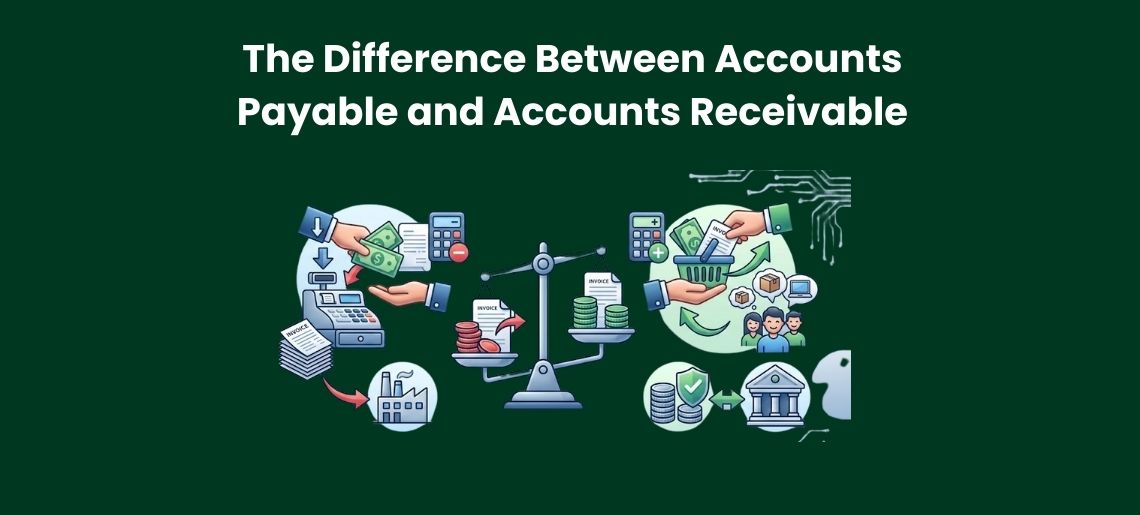
The Difference Between Accounts Payable and Accounts Receivable

If you run a small business, you have probably heard these two terms a lot. Accounts payable. Accounts receivable. They sound similar. But they mean very different things. Mixing them up can cause real problems. You might think you have more money than you actually do. Or you might miss a payment deadline and damage a supplier relationship you have spent years building. Neither of those things is good for business.

So it is worth taking a few minutes to understand both of these properly. Once you do, managing your finances becomes a lot clearer and a lot less stressful. This guide explains what each term means, how they work in real life, and why keeping track of both is so important for your business.

What Is Accounts Payable?

Accounts payable is money your business owes to others.When you buy something on credit, you do not always pay for it right away. Maybe you order stock from a supplier and they give you 30 days to pay. That amount sits in your accounts payable until you clear it. Think of it like a bill you have received but have not paid yet.Accounts payable sits on the liability side of your balance sheet. That means it is a debt your business is carrying. Until you pay it off, it reduces your net worth on paper.

Common examples of accounts payable:

Type Example
Supplier invoices Stock or raw materials ordered on credit
Rent Office, warehouse, or retail space
Utilities Electricity, internet, phone bills
Contractor fees Freelancers or tradespeople you have hired
Software subscriptions Tools billed monthly or annually

The goal with accounts payable is to know exactly what you owe and to pay it on time. Paying late can lead to penalty fees. It can also damage your relationship with suppliers, which is hard to rebuild once trust is lost. On the flip side, paying too early without good reason can hurt your cash position unnecessarily. Good accounts payable management finds the right balance.

What Is Accounts Receivable?

Accounts receivable is money owed to your business. When you sell a product or service and the customer does not pay straight away, that amount becomes accounts receivable. You have done the work. You have sent the invoice. Now you are waiting for the payment to come in. Think of it as money you are expecting to receive. Accounts receivable sits on the asset side of your balance sheet. It has value because someone legally owes it to you. But until that money actually lands in your bank account, you cannot spend it. It is not real cash yet.

Common examples of accounts receivable:

Type Example
Client invoices Work completed but not yet paid for
Credit sales Goods sold to a customer on a payment plan
Retainers Ongoing service fees not yet collected
Subscription fees Monthly charges still outstanding
Project or event work Delivered service, invoice awaiting payment

The goal with accounts receivable is to collect what you are owed, and to do it as quickly as possible. The longer an invoice stays unpaid, the harder it usually becomes to recover the money. Some unpaid invoices eventually become bad debts, which cost you time, money, and sometimes even legal fees.

Key Differences at a Glance

Here is a simple side-by-side comparison to make the distinction easy to remember.

Aspect Bookkeeping Accounting
Focus Recording transactions Analysing and interpreting data
Purpose Accuracy, organisation Strategy, growth, forecasting
Compliance BAS, GST, STP Reporting, tax compliance, regulatory submissions
Tools Xero, MYOB, QuickBooks Reports, dashboards, forecasting tools
Outcome Organised books Strategic insights for better decisions

A quick way to remember it: payable = pay out, receivable = receive in.

Both exist in your business at the same time. While you are waiting on a client to pay you, you are also paying your own invoices. That is completely normal. The key is managing both sides well so neither one gets away from you.

Why Cash Flow Connects the Two

Cash flow is the movement of money in and out of your business. Accounts payable and receivable are both directly tied to it, and the connection between them matters more than most people realise.

Here is the problem many small businesses run into. You might have a healthy amount of accounts receivable on paper. Clients owe you money. But if they have not paid yet, you do not have the cash in hand. And your accounts payable might be due this week. That gap between what you are owed and when you actually receive it can create serious financial pressure. This is one of the most common reasons small businesses struggle, even profitable ones. They are not losing money. They just cannot access it fast enough to cover their obligations.

How each side affects your cash flow:

Situation Impact on Cash Flow
Clients pay invoices quickly Positive, more cash available
Clients pay invoices late Negative, cash is tied up
You pay suppliers on time Neutral, trust is maintained
You pay suppliers early without reason Negative, cash leaves too soon
You miss a payable deadline Negative, penalties apply
You delay chasing overdue receivables Negative, debt ages and gets harder to collect

The sweet spot is when money comes in regularly and goes out in a predictable, manageable way. Getting the timing right between the two is one of the most valuable things you can do for the financial health of your business.

How Accounts Payable Works in Practice

Say you run a small cafe. You order coffee beans from a supplier. They deliver the beans and send you an invoice for $800, due in 30 days. At this point, you have $800 sitting in your accounts payable. You record it as a liability. When you pay the invoice before the due date, you remove it from accounts payable and your bank balance decreases by $800. Clean and simple. But imagine you have 10 different suppliers. Each one sends invoices at different times, with different due dates and different amounts. Keeping track of all of that manually gets messy fast. One missed invoice and you are dealing with a late fee or an awkward phone call.

Good habits for managing accounts payable:

  • Record every invoice as soon as you receive it
  • Set reminders for due dates so nothing slips through
  • Review your payables list regularly to know what is coming up
  • Negotiate longer payment terms with suppliers where possible
  • Do not pay early unless there is a discount that genuinely makes it worthwhile
  • Always check invoices for errors before making a payment

Building these habits into your routine keeps your payables under control and your supplier relationships in good shape.

How Accounts Receivable Works in Practice

Back to that cafe. Now imagine you do catering for a local office. You deliver the food and send an invoice for $1,200, due in 14 days. You now have $1,200 in accounts receivable. You record it as an asset. When the client pays, the money moves into your bank account and the invoice comes off your receivables list. Again, with one client this is straightforward. But with multiple clients on different payment schedules, and some of them paying late, things get complicated quickly. Chasing invoices takes time and energy that most business owners would rather spend elsewhere.

Good habits for managing accounts receivable:

  • Send invoices straight away after completing work or delivering goods
  • Set clear payment terms upfront so clients know exactly when payment is due
  • Follow up on overdue invoices quickly and professionally
  • Consider offering small early payment discounts to encourage faster payments
  • Use accounting software to track invoice status automatically
  • Keep records of all communication with clients about outstanding payments

The faster you get money in the door, the less pressure you feel on the payables side.

Common Mistakes Business Owners Make

Both sides of this are easy to get wrong, especially when you are busy running everything else in the business.

Mistake Which Side Why It Matters
Forgetting to record an invoice Payable You miss the due date and face penalties
Paying the wrong amount Payable Creates reconciliation headaches
Not checking invoices for errors Payable You overpay without realising it
Delaying sending invoices Receivable Clients take even longer to pay
Not following up on late payments Receivable Debt gets older and harder to recover
Unclear payment terms on invoices Receivable Clients have no real deadline to meet
Offering credit without checking history Receivable Risk of non-payment increases significantly

These mistakes can quietly drain your cash flow over time. They are often hard to trace back to the source until the damage is already done. Staying on top of both sides consistently is the best way to avoid them.

The Role of Bookkeeping and Professional Support

Both accounts payable and accounts receivable are central to how your business runs day to day. Managing them well requires consistent, accurate bookkeeping. Without that foundation, it is very easy for things to fall through the cracks.

A good bookkeeper or accountant will make sure your payables are recorded correctly and cleared on time. They will also help you track your receivables, follow up on overdue invoices, and make sure your records are clean and accurate all year round. For many small business owners, this is one of the first tasks worth handing over to a professional. It saves time, reduces the risk of costly errors, and gives you a much clearer picture of where your business actually stands financially.

Cloud-based accounting tools like Xero or MYOB can also make both sides much easier to manage. They let you see what you owe and what you are owed in real time, send automatic payment reminders, and keep everything in one place. Even if you do use software, having a professional review your books regularly is still a smart move.

Two Sides of the Same Coin

Accounts payable and accounts receivable are two of the most basic parts of running a business. But getting both right makes a real difference. You know what is going out, you know what is coming in, and you can make decisions with confidence instead of guessing. The businesses that stay financially healthy are usually the ones that take both sides seriously and stay on top of them consistently.

If you ever feel like the bookkeeping side of things is getting away from you, the team at Elite Plus Accounting is always happy to help. Sometimes a little support goes a long way.

Frequently Asked Questions

How long should you wait before chasing a late invoice?

Most businesses follow up as soon as the invoice is one day past the due date. A polite reminder email is a good first step. If it stays unpaid for 7 to 14 days, a more direct follow-up is appropriate. Do not wait weeks to act.

Yes, almost every business carries both at once. You might owe money to suppliers while also waiting on payments from clients. Both sit on your books simultaneously and need to be managed together.

You do not technically need it, but it makes things significantly easier. Tools like Xero, MYOB, or QuickBooks automate invoice tracking, send payment reminders, and give you a live view of your financial position.

Money paid through accounts payable may be deductible as a business expense. The rules around timing and eligibility can be complex, so it is best to work with a qualified accountant to make sure everything is handled correctly.

Send invoices promptly, set clear payment terms, follow up quickly when payments are late, and consider using direct debit or automated payment options. The sooner you act on an overdue invoice, the better your chances of collecting in full.

Payday Super 2026: Melbourne Payroll Guide for Employers

Australia’s superannuation system is going through one of its biggest changes in decades. From 1 July 2026, employers across the country will be required to pay Superannuation Guarantee contributions every payday, not quarterly as they do now. This reform, known as Payday Super, will change how payroll, cash flow, and compliance are managed at every level of a business.For employers, payroll managers, bookkeepers, and HR professionals in Melbourne, understanding what is changing and what needs to be done is critical.

This guide explains what Payday Super is, why it is being introduced, and what Melbourne employers need to do to get ready before 1 July 2026.

Key Changes at a Glance

Before getting into the details, here is a quick summary of what is changing and what is staying the same.

What is changing:

Super is no longer paid quarterly. From 1 July 2026, super must be paid on every single payday. If a business pays staff weekly, super goes out weekly. If the pay cycle is fortnightly, super goes out fortnightly. The payment must reach the employee’s super fund within a few days of each pay run.

What is staying the same:

The super guarantee rate continues to apply. Employers must still contribute the correct percentage of an employee’s ordinary time earnings. The eligibility rules for who receives super also remain largely the same.

What this means for employers:

Super payments will need to be managed much more frequently. Payroll software, cash flow planning, and record keeping all need to be ready for this shift. The good news is that with the right preparation, it is very manageable.

What Is Payday Super?

Right now, employers in Australia pay super once every three months. This is called quarterly super contributions. Most businesses have been doing this for years. But from 1 July 2026, that changes. Under the new Payday Super rules, employers will need to pay super at the same time as wages. So every time payroll is processed, super must go with it.

The Australian Government announced this change to help workers build their retirement savings faster. When super is paid more often, it earns more interest over time. For workers, this adds up to thousands of extra dollars by the time they retire. For employers, it means a big shift in how payroll works.

Why Is This Change Happening?

The government has two main reasons for introducing Payday Super.

  1. It protects workers. Under the old quarterly system, some employers fell behind on super payments. Some even failed to pay super at all. This left workers short changed. Payday Super reduces that risk because super is tied directly to each pay run.
  2. It helps retirement savings grow. Super paid more often means more time in the fund. More time in the fund means more investment growth. The government estimates workers could be tens of thousands of dollars better off over their working life.

For Melbourne employers, understanding this change early is key. The earlier a business prepares, the smoother the transition will be.

Key Dates Employers Need to Know

Here are the important dates to keep in mind. 1 July 2026 is the start date. From this day, all employers must pay super on payday. This applies to every business in Australia, including all Melbourne employers.

Businesses should start preparing well before this date. Most payroll experts recommend getting ready at least six months in advance. For those who have not started thinking about it yet, now is a good time to begin.

How Does Payday Super Work in Practice?

Here is a simple breakdown of how Payday Super works under the new system:

  • Super Follows Every Pay Run: Super contributions must be sent to the employee’s fund every time payroll is processed, not at the end of the quarter.
  • Tight Timeframe for Receipt: The super must be received by the employee’s super fund within a few days of each pay run.
  • Rules Still Being Finalised: The ATO is still finalising some of the exact processing rules, but the timeframe is expected to be very tight.
  • The Quarterly Buffer Is Gone: Under the old system, employers had up to 28 days after the end of each quarter to pay. That buffer is gone under Payday Super.
  • Pay Cycle Sets the Super Cycle: If a business pays staff weekly, super goes out weekly. If the pay cycle is fortnightly, super goes out fortnightly. The pay cycle sets the super cycle.

What This Means for Melbourne Employers

For Melbourne business owners, here is what this change means day to day.

  • Cash flow planning becomes more important: Super funds must be available every payday, not just four times a year. This means business cash flow needs to be tighter and better managed.
  • Payroll software needs to be updated: Most modern payroll systems will be updated to handle Payday Super automatically. But employers need to check that their software is compliant before 1 July 2026.
  • Manual payroll processes will not work well: Businesses still doing payroll by hand or using spreadsheets should consider upgrading. Payday Super will be very difficult to manage without the right software.
  • Super fund relationships matter: Employers need to know which funds their employees use and be able to send payments to those funds quickly and easily. If a clearing house is used, it should be checked to confirm it can handle more frequent payments.

Steps to Get Payroll Ready

Here is a simple action plan for Melbourne employers.

Step 1: Review the current payroll setup.

Employers should look at how payroll is currently processed and how super is paid. Is it done in house? Is an accountant or bookkeeper involved? Is payroll software being used? Understanding the current situation is the first step.

Step 2: Check payroll software.

Employers should talk to their payroll software provider and ask if the system will be updated for Payday Super. Most of the major systems like Xero, MYOB, and QuickBooks will be updated. But it is always better to confirm directly.

Step 3: Review cash flow.

Employers should work out how much super is currently paid each quarter. Dividing that by the number of pay runs gives a rough figure of how much extra cash will be needed each payday. Businesses need to make sure they can handle that.

Step 4: Update employee super fund details.

Every employee’s super fund details should be checked and updated. This includes the fund name, the USI (Unique Superannuation Identifier), and the member number. Outdated or incorrect details will cause payment delays.

Step 5: Talk to an accountant.

Working with an accountant or bookkeeper means letting them know about the upcoming change. They can help plan for it and make sure systems are set up correctly. At Elite Plus Accounting, the team helps Melbourne businesses get their payroll ready for big changes like this one.

Step 6: Train the payroll team.

If someone else handles payroll, they need to know about the change. Giving them time to learn the new process before it goes live will make the transition much smoother.

Penalties for Non-Compliance

Here is what employers need to know about the consequences of missing super payments under the new system:

  • Increased ATO Monitoring: The ATO will be keeping a close eye on super payments because super is now tied to every single pay run.
  • Easier to Detect Late Payments: Late or missing payments will be much easier for the ATO to spot compared to the old quarterly system.
  • Superannuation Guarantee Charge Applies: Under the Superannuation Guarantee Charge rules, employers who miss super payments face a charge that includes the unpaid super, interest, and an administration fee.
  • No Business Deduction Allowed: These charges cannot be claimed as a business deduction, making them even more costly to the bottom line.
  • Near Real Time Visibility: Under Payday Super, the ATO will have better visibility of payment timing in near real time. There is very little room to fall behind without being noticed.
  • The Bottom Line: Super must be paid on time, every payday, from 1 July 2026 onwards.

Melbourne Employers: Stay Ahead of Payday Super

Payday Super is one of the most significant changes to hit Australian payroll in decades. From 1 July 2026, every business in Melbourne will need to pay super on payday, every single time wages go out. The quarterly system that most employers have relied on for years will no longer be compliant. Businesses that start preparing now, by reviewing their payroll setup, updating software, and planning cash flow, will be in a much stronger position when the deadline arrives.

The change does not have to be overwhelming. With the right systems and the right support in place, Payday Super is very manageable. The key is to act early rather than scramble at the last minute. For Melbourne employers who want to get their payroll ready and stay on the right side of compliance, the team at Elite Plus Accounting is here to help. Reach out today for a conversation about how the business can be prepared well ahead of 1 July 2026.

Frequently Asked Questions

What is the superannuation law in 2026?

From 1 July 2026, employers must pay superannuation on every payday instead of quarterly. This change, known as Payday Super, legally links super payments to each payroll run.

Super must be paid every payday, quarterly payments will no longer be allowed, and compliance monitoring will become near real-time. The reform changes payment timing, not contribution rates.

No. From 1 July 2026, quarterly super payments will be non-compliant. All employers must move to payday-based super payments.

Employers must still pay super on time using the default fund in their payroll system or workplace agreement. Missing fund details do not allow payment delays.

No. The law applies to all employers from 1 July 2026 with no delayed start for small businesses. Support will come through guidance, payroll software updates, and professional services, not extended deadlines.

Easy Bookkeeping Tips for Retail Store Owners

A retail store has a very dynamic environment, and running it can be exciting and rewarding. However, it also comes with many responsibilities such as helping customers, restocking shelves, managing staff, and handling the store’s finances. Understanding where money comes from and where it goes is essential for the success and stability of any retail business.Many retail store owners find bookkeeping confusing and difficult, especially if they have no background in finance. Numbers, records, and systems can feel overwhelming, and this often leads to stress and uncertainty about the store’s financial position.

This guide breaks down simple steps that anyone can learn to manage a store’s finances with confidence. It helps retail owners plan better, avoid mistakes, stay organised, and grow their business with clarity and confidence. No financial knowledge is required to understand this guide,  only a willingness to learn and improve how store finances are managed.

Why Bookkeeping Is Important for Retail Stores

Bookkeeping helps retail store owners understand how the store is performing day by day. It shows how much money is being earned, how much is being spent, and where it is being spent.Without proper bookkeeping, it becomes easy to lose control of the store’s finances. A store may have high foot traffic every day, but there can still be confusion about whether the business is growing or struggling financially due to the absence of clear financial records.

Good bookkeeping helps retail owners to:

  • Understand if the store is making money
  • Track daily sales clearly
  • Control spending
  • Manage stock properly
  • Pay staff correctly and on time
  • Make better business decisions
  • Plan for growth and expansion

Bookkeeping provides control and clarity over the store’s finances, allowing store owners to focus on customers, business development, and confident growth instead of confusion and financial uncertainty.

Practical Bookkeeping Tips for Retail Businesses

Running a retail store does not require a complex financial system or expertise in finance. It only requires basic knowledge, the right habits, and simple processes to operate efficiently. Below are easy, practical bookkeeping tips designed specifically for retail store owners. These tips are simple to follow, easy to maintain, and designed to make managing store finances stress-free and manageable.

1. Separate Personal and Business Money

One of the most important first steps in bookkeeping is keeping personal money and business money separate. Many small business owners mix the two without realising how confusing it can become later. When everything is mixed together, it becomes very difficult to understand how the store is actually performing. It becomes unclear what money belongs to the business and what belongs to the owner personally.

What to do:

  • Open a bank account just for the store
  • Use it only for store income and expenses
  • Avoid using store money for personal spending

This simple step creates clarity and makes all other bookkeeping tasks much easier.

2. Keep Track of Every Sale and Purchase

Every sale made and every item purchased matters. Even small amounts add up over time. When records are not kept, control over finances is lost. Keeping records helps store owners understand how much money is coming in and how much is going out.

Simple ways to track:

  • Write daily sales in a notebook or system
  • Save all receipts
  • Record all purchases, even small ones
  • Update records regularly

When everything is written down, it becomes easy to see where the money is going.

Daily Bookkeeping Checklist

Task What It Means Done Daily
Record sales Write down total sales for the day
Save receipts Keep all purchase receipts
Track expenses Note anything spent during the day
Update cash balance Check cash in register
Check POS records Match POS with actual sales

3. Know the Store’s Stock

Stock is the heart of any retail store. Without knowing what is available, what sells, and what does not sell, money can be lost without realising it. Good stock tracking helps prevent running out of popular items and avoids overbuying products that do not sell.

Easy stock control steps:

  • Keep a simple product list
  • Update it when stock comes in or goes out
  • Do regular physical stock checks

This helps store owners make smarter buying decisions and reduce waste.

4. Simplify Staff Costs with Payroll and Rostering Automation

Managing staff manually can be stressful and confusing. Mistakes in wages, hours, or schedules can create problems for both store owners and employees.Using payroll and rostering systems makes staff management easier. Automation removes manual calculations and reduces the risk of errors.

How automation helps:

  • Automatically calculates staff hours and wages
  • Tracks shifts and schedules
  • Reduces mistakes
  • Saves time
  • Keeps staff payments organised

This creates a smoother and more reliable system for managing staff costs.

5. Reconcile Records Regularly

This simply means checking that store records match what is actually happening in the bank account. Without regular checks, small mistakes can grow into big problems over time.

How to do it simply:

  • Compare records with bank statements
  • Check weekly or monthly
  • Fix mistakes quickly

This keeps financial records accurate and reliable.

6. Use Simple Tools

It is not necessary to have complex systems for good bookkeeping. Simple, easy to understand tools work as well when used correctly and consistently. 

Helpful tools:

  • Notebook
  • Spreadsheet
  • Basic bookkeeping software
  • POS systems

The best tool is always the one that is used regularly and correctly.

7. Stay Consistent

Bookkeeping only works when it is done regularly. Waiting too long between updates makes it harder and more stressful.

Easy routine:

  • Daily: record sales
  • Weekly: update expenses
  • Monthly: review performance

Consistency creates control and confidence.

8. Plan for Busy and Slow Periods

Retail businesses naturally go through busy seasons and slow periods. Planning helps prevent stress and financial pressure.

Planning helps to:

  • Prepare stock levels
  • Manage staff schedules
  • Control spending
  • Avoid shortages and waste

Good planning keeps the business stable throughout the year.

9. Monitor Key Numbers

Complex reports are not necessary. Simple numbers are enough to understand store performance.

Important things to watch:

  • Best-selling products
  • Slow-moving items
  • Profit on products
  • Daily and monthly sales

These numbers help guide better business decisions.

10. Use Technology to Save Time

Use of technology reduces workload on the owners and human errors. It allows systems to work together automatically and efficiently. 

Technology benefits:

  • Saves time
  • Reduces errors
  • Improves accuracy
  • Creates clear reports
  • Simplifies tracking

This allows store owners to focus more on customers and business growth.

11. Don’t Be Afraid to Ask for Help

Store owners managing everything alone can feel very overwhelmed. They shouldn’t be afraid to ask for help. Professional bookkeepers can help make a significant difference in management of the store’s finances.

Professionals can help to:

  • Set up systems
  • Organise records
  • Improve efficiency
  • Save time
  • Reduce stress

Getting help is a smart business decision, not a weakness.

Building a Strong Retail Business Through Simple Bookkeeping

Good bookkeeping is the foundation of a strong and successful retail store. It provides clarity, confidence, and control over business operations. When records are organised and systems are simple, better decisions are made, and stress is reduced. Running a successful retail store does not require financial expertise. With simple systems, consistency, and the right support, bookkeeping becomes easy to manage and maintain. Step by step, these habits help build a stronger, more stable, and more successful retail business.

For retail store owners who want guidance in setting up simple systems or improving how their finances are managed, professional support can make the process easier and more effective. The right advice and structure can help create long-term stability and confidence, allowing business owners to focus on growth, customers, and the future of their store.

Frequently Asked Questions

Can retail owners manage bookkeeping without financial knowledge?

Yes. Retail owners can manage bookkeeping without financial knowledge by using simple systems, basic tools, and consistent routines. With easy processes in place, bookkeeping becomes manageable for anyone.

Automation helps retail businesses by reducing manual work, saving time, and preventing mistakes. It simplifies tasks such as recording sales, managing staff schedules, and tracking payments, making daily operations easier and more organised.

Record reconciliation means checking that bookkeeping records match what is actually happening in the bank account. It helps ensure that all money coming in and going out is recorded correctly.

When bookkeeping is ignored, retail owners lose control of their finances. This can lead to confusion, poor decisions, wasted money, business stress, and long-term financial instability.

Professional support is not always necessary, but it can be very helpful. Support from professionals can improve accuracy, save time, reduce stress, and help create better systems for managing store finances.

Why Every Small Business Needs a Bank Reconciliation Statement

Accurate bank reconciliation is a key practice for all small businesses. However, it is one of the most overlooked practices. When reconciliation is neglected errors can go unnoticed, financial discrepancies can grow and businesses can lose clarity about their true financial position. Although bank reconciliation may seem tedious or time-consuming, it plays a far more important role than many business owners realise.

Regular bank reconciliation helps businesses identify mistakes, reduce financial risk, detect irregular activity, and maintain healthy cash flow. For business owners who are new to this process or find it difficult to manage, professional accounting and bookkeeping services can provide valuable support in maintaining accurate and reliable financial records.

In this blog, we will explore what bank reconciliation is, why it matters, and how it supports stronger financial management and business stability.

What Is Bank Reconciliation?

A ledger is a document tracking all the money going in and out of a business while a bank statement is a document where all the money that has been deposited or withdrawn from a bank is recorded. Ideally they both should match, but due to mismatched entries, timing delays and bank charges they often  don’t. This is where a bank reconciliation becomes crucial. 

Bank reconciliation is the process of comparing a business’s internal financial records with its bank statement to ensure that both reflect the same cash position. The main purpose of a bank reconciliation is to check that all the transactions have been recorded properly and there are no discrepancies in the financial reports.

Why Is Bank Reconciliation Important?

Bank reconciliation is an important process for maintaining financial control and long-term business stability. It provides clarity, structure, and accuracy in managing business finances. 

1. Protects Your Business from Cash Leakage

Businesses often don’t notice the small losses straightaway, because they happen gradually. Over time, these small losses can total up to a huge amount and cause damage to business stability and cash reserves.Reconciliation creates visibility and accountability over every movement of money.

It protects your business by helping you:

  • Identify unknown transactions
  • Detect duplicate payments
  • Spot unauthorised activity
  • Find missing deposits
  • Verify payment accuracy
  • Monitor recurring charges

This creates a protective financial framework around your business cash flow.

2. Improves Cash Flow Management

Cast flow is not just about how much money businesses have, but how much money they can actually use. Without reconciliation, businesses often base decisions on balances that include uncleared funds, missing payments, or inaccurate records.

Monthly reconciliation ensures:

  • Your cash balance reflects usable funds
  • Cleared money is separated from pending money
  • Incoming and outgoing flows are clearly visible
  • Spending capacity is accurately measured
  • Financial planning is more reliable

This clarity directly improves financial stability and decision-making confidence.

3. Ensures Accurate Financial Reports

Financial reports are only reliable if the data given to them is reliable itself. Without regular reconciliation, reports may look professional but be fundamentally inaccurate. This leads to false performance insights and misinformed strategies.

Reconciliation supports:

  • Accurate income reporting
  • Complete expense tracking
  • Reliable cash balances
  • Correct liability positioning
  • Trustworthy financial analysis

When your bank data is reconciled, your reports reflect reality and not assumptions.

4. Reduces Risk of Fraud and Internal Errors

Even in small businesses with high trust between the employees, errors happen. Sometimes systems fail or people make mistakes which can lead to a break in processes. Reconciliation acts as a structured verification process that creates transparency and accountability.

It reduces risk by:

  • Verifying transaction legitimacy
  • Detecting unusual patterns
  • Highlighting inconsistencies
  • Preventing hidden misuse
  • Strengthening financial discipline

This is not about distrust, in fact it’s about creating secure systems.

5. Builds Financial Confidence for Business Owners

Financial uncertainty is one of the biggest stress factors in business ownership. Without clarity, decision-making becomes reactive instead of strategic. Reconciliation creates certainty through verified information.

It helps business owners:

  • Trust their financial data
  • Understand their real cash position
  • Make confident decisions
  • Reduce financial anxiety
  • Plan with clarity

Confidence comes from control and reconciliation creates that control.

6. Supports Business Growth and Financial Stability

Sustainable growth requires structure, systems, and financial clarity. Businesses that scale without financial discipline often face instability, inefficiency, and risk exposure.

Monthly reconciliation supports growth by providing:

  • Clean financial records
  • Accurate cash positioning
  • Verified transactions
  • Reliable reporting systems
  • Strong financial foundations

This allows growth to happen from a position of stability, not risk.

Regular reconciliation is easier to maintain when supported by structured systems and professional  bookkeeping services that ensure accuracy and consistency in financial records.

How the Bank Reconciliation Process Works

The bank reconciliation process is a structured process that ensures that every transaction is recorded accurately and verified. By following a consistent process, businesses can maintain clean records, prevent errors and ensure financial accuracy

Process Steps

  1. Obtain the latest bank statement: Collect the most recent bank statement to ensure you are reconciling against the most up-to-date and accurate transaction data.
  2. Review internal accounting records: Check your accounting system, cash book, or ledger to understand the transactions that have been recorded internally.
  3. Match transactions line-by-line: Compare each transaction in your records with the bank statement to ensure amounts, dates, and references align correctly.
  4. Identify missing or unmatched entries: Highlight any transactions that appear in one record but not the other for further review and investigation.
  5. Investigate discrepancies: Analyse differences to determine whether they are caused by timing delays, recording errors, or missing transactions.
  6. Account for timing differences and pending transactions: Separate transactions that are still processing, such as uncleared payments or deposits in transit, from actual errors.
  7. Record unprocessed bank charges or automatic payments: Add any bank fees, subscriptions, or automatic withdrawals that were processed by the bank but not recorded internally.
  8. Correct recording errors: Fix data entry mistakes, incorrect amounts, or misclassified transactions in your accounting records.
  9. Update internal records: Ensure all corrections and adjustments are properly reflected in your accounting system for accuracy.
  10. Confirm both balances match: Finalise the reconciliation by verifying that your internal cash balance and bank statement balance align exactly.

By following a structured reconciliation process, businesses create a verified and reliable cash position they can trust. Regular reconciliation prevents small errors from becoming major issues and ensures financial records remain accurate, consistent, and dependable.

Common Errors Found During Bank Reconciliation and How to Correct Them

Bank reconciliation often uncovers financial issues that may otherwise remain hidden in daily operations.Identifying and correcting these errors early is essential for maintaining accurate financial records and preventing long-term financial inaccuracies.

Common errors and how to correct them:

  • Unrecorded transactions – Occur when automatic payments, bank charges, or interest entries are processed by the bank but not recorded internally.
    Correction: Update internal records to reflect the missing transactions.
  • Duplicate entries – Happen when invoices are paid more than once or transactions are recorded multiple times.
    Correction: Identify the duplicate and reverse or remove the extra entry in the accounting system.
  • Incorrect amounts – Caused by data entry mistakes or system import errors.
    Correction: Verify the original transaction and adjust the recorded amount to match the actual bank amount.
  • Misclassified transactions – Occur when payments are recorded under the wrong account category.
    Correction: Reclassify the transaction to the correct account in the records.
  • Timing differences – Appear when payments or deposits are recorded internally but have not yet cleared the bank.
    Correction: No adjustment needed,  these resolve naturally once transactions are processed by the bank.

By identifying and correcting these common errors through regular reconciliation, businesses prevent small discrepancies from turning into larger financial problems. Consistent reconciliation protects record accuracy, strengthens financial control, and ensures that business data remains reliable and trustworthy over time.

Example of a Bank Reconciliation

Consider a business that shows a cash balance of $12,000 in its accounting system. The bank statement shows a balance of $11,300.

During reconciliation, the following differences are identified:

  • A customer payment of $900 recorded in the system but not yet processed by the bank
  • Bank charges of $50 not recorded internally
  • An automatic payment of $650 that cleared the bank but was not recorded in the system

After adjustments:

  • $900 deposit in transit is noted
  • $50 bank charge is recorded
  • $650 automatic payment is recorded

Once these adjustments are made, both balances align, confirming that the true cash position is accurate and verified.

Financial Clarity Starts with Reconciliation

Bank reconciliation is a vital financial control process that helps small businesses maintain accuracy, clarity, and stability. By reconciling regularly, businesses protect their cash, reduce risk, and gain confidence in their financial data.

If you’d like support with managing your bank reconciliation or improving the accuracy of your financial records, the team at Elite Plus Accounting is here to help. Our accounting and bookkeeping services are designed to simplify financial management and give you the confidence that your numbers are in safe hands, so you can focus on running your business with clarity and peace of mind.

Frequently Asked Questions

What are the main reasons for preparing a bank reconciliation statement?

To ensure business records match bank records, detect errors, identify missing transactions, protect cash flow, and maintain accurate financial information.

Reconcile monthly, use accurate statements, keep organised records, match transactions carefully, investigate discrepancies quickly, and document all corrections clearly.

It is usually prepared by a business owner, bookkeeper, accountant, or finance professional responsible for maintaining financial records.

Monthly reconciliation keeps financial records accurate, prevents errors from building up, improves cash flow tracking, and supports better business decisions.

No. Skipping reconciliation increases the risk of errors, cash flow issues, and financial inaccuracies, even for small businesses.

Why Businesses Are Replacing Spreadsheets with Accounting Software

For many years spreadsheets have been the foundation of finance management for businesses. But every business has to evolve and upgrade to become successful. Spreadsheets may have helped track business income, manage expenses or organise financial information in simple ways, but in order to grow business finance management needs more than that. 

As businesses grow, spreadsheets often become an operational risk more than a helpful tool. Businesses need compliance requirements, reporting standards, data security and real time financial visibility to grow efficiently which is why many businesses are replacing spreadsheets with accounting softwares. Modern platforms such as Xero accounting software provide systems that spreadsheets were never designed to deliver.

Why the Right Financial System Matters for Business Stability

Financial tools should not only be used for basic accounting and bookkeeping services, they should help businesses operate, plan and grow. The system a business uses to manage its finances affects:

  • Data accuracy influences decision-making: Reliable systems ensure that financial information is correct, consistent, and trustworthy, allowing businesses to make informed strategic choices.
  • Compliance protection reduces legal and financial risk: Structured systems support regulatory obligations and reporting requirements, lowering the risk of penalties and errors.
  • Cash flow visibility supports business continuity: Clear financial systems allow businesses to understand real-time cash positions and manage liquidity effectively.
  • Operational efficiency improves productivity: Automated processes reduce manual work, saving time and lowering administrative pressure.
  • Scalability supports long-term growth: Structured financial systems allow businesses to grow without losing financial control.

When financial data is not reliable or delayed, it affects major business decisions and they become reactive instead of strategic. A poor financial system can cause problems like missed deadlines, cash flow surprises and compliance issues.

Why Many Small Businesses Start with Spreadsheets

Many small businesses start with spreadsheets because of their simplicity and accessibility but as operations grow, tools like Xero accounting software offer a more structured, reliable way to manage finances and scale confidently. Most office software packages already have Microsoft Excel installed in  them, which makes it a no-brainer for small businesses to use it. ‘

  • Low cost makes them attractive for startups: Free or low-cost tools allow new businesses to manage finances without financial strain.
  • Ease of use reduces learning barriers: Most people are already familiar with spreadsheets, making them easy to adopt.
  • Flexibility allows custom tracking: Businesses can create simple systems for income, expenses, and budgets.
  • Basic functionality supports early-stage needs: For low transaction volumes and simple operations, spreadsheets can be sufficient.
  • Speed of setup enables quick implementation: Spreadsheets require no formal system setup or configuration.

For very small operations with low transaction volumes and minimal compliance complexity, spreadsheets may appear sufficient. However, as soon as transaction volumes increase, staff numbers grow, or compliance requirements expand, spreadsheets begin to show their limitations.

The Risks and Weaknesses of Spreadsheet-Based Accounting

While spreadsheets are a powerful tool, they become a huge risk when used as accounting systems.

  • Manual data entry increases error risk: Human input mistakes, formula errors, and broken references can distort financial data without detection.
  • Lack of accounting controls weakens data integrity: Spreadsheets do not enforce double-entry accounting, balanced ledgers, or validation rules.
  • Absence of audit trails reduces accountability: Changes to financial data can occur without traceability or transparency.
  • Compliance limitations increase regulatory risk: Spreadsheets are not designed for reporting structures, payroll obligations, superannuation processing, or regulatory documentation requirements
  • Version control problems create data confusion: Multiple users and file versions lead to inconsistencies and unreliable records.
  • Poor scalability limits business growth: As transaction volumes grow, spreadsheets become complex, slow, and unmanageable.

As businesses grow, they need to update their financial systems as well to ensure that they manage risks, control finances and build long-term stability effectively.

Spreadsheets vs Accounting Software

To better understand the practical difference between spreadsheets and accounting software, the comparison below highlights how each tool supports business operations.

Feature Spreadsheets Accounting Software
Data entry Manual input increases time and errors Automated entries reduce mistakes
Accuracy High risk of formula and input errors Built-in validation improves reliability
Scalability Becomes difficult as transactions grow Designed to scale with business growth
Reporting Requires manual report creation Real-time, automated financial reporting
Data security Files easily lost or overwritten Encrypted, cloud-based data protection
Multi-user access Limited collaboration control Controlled multi-user permissions
Automation No workflow automation Automated invoicing, reconciliation, reporting
Compliance structure Manual tracking required Built-in compliance frameworks
Integration Limited system connectivity Integrates with payroll, banking, CRM tools
Business visibility Delayed financial insights Real-time financial visibility

The Advantages of Moving to Accounting Software

Accounting software creates a structured financial system rather than a collection of disconnected files.

1. Automation improves efficiency: Processes such as transaction imports, reconciliations, invoicing, payroll  and reporting are automated through platforms like Xero accounting software, reducing manual work and human error.

2. Built-in compliance supports regulation: Accounting systems are structured around regulatory requirements, supporting:

  • GST management
  • BAS preparation
  • Payroll compliance
  • Record-keeping standards

3. Financial controls improve accuracy: Automated validation, double-entry accounting, and transaction controls improve data accuracy and reliability.

4. Real-time data enables better decisions.

Businesses gain live access to:

  • Cash flow positions
  • Profitability
  • Outstanding receivables
  • Liabilities
  • Financial performance

5. Standardised reporting improves clarity: Reports are generated directly from live data, ensuring consistency and reliability across financial statements.

6. Security systems protect sensitive data.

Modern systems provide:

  • Secure cloud storage
  • Access controls
  • Activity tracking
  • Data encryption
  • Automated backups
  • Disaster recovery protection

Accounting software provides financial structure, consistency, data reliability, compliance alignment, strategic visibility and operational control which create long term stability and financial resilience.

Recognising the Right Time to Move Beyond Spreadsheets

Certain signs show businesses that spreadsheets are no longer suitable for them and it is time to move to accounting softwares

  • Rising transaction volumes increase complexity: Manual systems become inefficient and error-prone as activity grows.
  • Growing compliance requirements increase risk: Regulatory and reporting obligations become harder to manage manually.
  • Cash flow uncertainty increases financial stress: Lack of real-time visibility creates operational risk.
  • Reporting delays reduce business insight: Slow reporting weakens decision-making ability.
  • Data inconsistencies undermine trust: Conflicting records damage financial reliability.
  • Administrative workload becomes unmanageable: Manual systems consume time and resources.

This is often the point where businesses begin considering tools such as Xero accounting software to support growth and operational stability.

Transitioning from Spreadsheets to Accounting Software: A Practical Guide

Moving from spreadsheets to accounting software can be stressful for small business owners hence it should be done properly.

Step 1: Assess Your Current Financial Processes

Identify what you currently track, how data flows. Understanding current workflows highlights system weaknesses.

Step 2: Define Your Business Needs

Consider requirements such as:

  • Transaction volumes
  • Compliance obligations
  • Reporting needs
  • Payroll requirements
  • Multi-user access
  • Integration needs

Business requirements guide system selection, including platforms such as Xero accounting software.

Step 3: Structure Your Data

Clean and organise existing financial records before migration.

Step 4: Set Up the System Properly

This includes:

  • Chart of accounts configuration
  • Compliance settings
  • User permissions
  • Reporting structures

Correct setup supports regulatory requirements.

Step 5: Migrate Data

Transfer historical financial data accurately and securely. Secure transfer maintains financial continuity.

Step 6: Train Your Team

Ensure staff understand how to use the system correctly. Education ensures proper system use.

Step 7: Implement Financial Processes

Establish workflows for invoicing, reporting, reconciliation, payroll, and compliance. Clear processes ensure operational consistency.

Switching from spreadsheets to accounting software doesn’t have to be stressful. With the right setup and guidance, the process can be simple, structured, and smooth.Sometimes, the right support is all it takes to make the transition easy.

Overcoming Common Barriers to Switching

Many small business owners have some concerns about switching to accounting softwares from spreadsheets. Some of these concerns are

1. Cost fears often ignore long-term savings: While accounting software involves investment, it reduces long-term costs by lowering error risk, saving time, and improving efficiency.

2. Learning concerns underestimate system usability: Modern systems are designed to be user-friendly, and structured training makes the transition manageable.

3. Migration fears overestimate disruption: With proper planning, data migration can be secure and accurate.

4. Comfort with familiarity delays progress: Familiar tools feel safe, but familiarity should not be confused with effectiveness.

Tracking Success After the Transition

Success is measured through operational and financial improvements.

  • Improved accuracy strengthens trust: Reliable data supports confident decision-making.
  • Faster reporting improves responsiveness: Timely information enables proactive management.
  • Better cash flow visibility increases stability: Financial clarity supports planning.
  • Reduced compliance risk protects the business: Regulatory alignment lowers exposure.
  • Lower admin workload improves productivity: Automation frees operational capacity.
  • Stronger planning capability supports growth: Strategic insight enables scalability.

A Smarter Way to Manage Business Finances

Spreadsheets may work in the early stages of a business, but they were never designed to support long-term growth, financial control, and operational stability. As businesses evolve, they need systems that provide structure, accuracy, automation, security, and real-time financial visibility. Accounting software delivers the foundation modern businesses need to operate efficiently and make confident financial decisions.

Replacing spreadsheets is not just a system upgrade, it’s a strategic move toward better financial management, lower risk, and stronger business performance. With the right setup, guidance, and structure, the transition becomes a positive step forward, helping businesses build a more stable, scalable, and resilient financial future.

Frequently Asked Questions

What are the risks of using spreadsheets for accounting?

Spreadsheets are prone to human errors, such as incorrect formulas or manual data entry mistakes. They lack audit trails, proper financial controls, and real-time reporting, making them unreliable as businesses grow. Version control and scalability issues can also lead to confusion and operational risk.

A business should consider upgrading when transaction volumes increase, reporting becomes complex, or real-time financial visibility is needed. If spreadsheets cause delays, inconsistencies, or limit multi-user collaboration, it’s a clear sign that accounting software is needed.

While accounting software involves an initial investment, it often saves time, reduces errors, and improves efficiency, making it cost-effective in the long run. Platforms like Xero accounting software are scalable and provide features that can offset costs by reducing manual work and operational risk.

Yes, but most modern accounting systems are user-friendly and designed for quick adoption. Structured training ensures that staff understand workflows, data entry, reporting, and compliance features, making the transition smooth and effective.

Assess your business needs, including transaction volume, reporting requirements, multi-user access, payroll needs, and integration with other tools. Platforms like Xero accounting software are popular because they combine scalability, automation, and real-time financial visibility suitable for small and growing businesses.