

Running a construction business is a lot of hard work. You spend your days on-site making sure everything is built correctly and safely. But many builders find that even when they are busy, the bank account does not look great. This is usually because of a cash flow gap. A gap is just the time between when you pay for materials or labor and when the client finally pays you back.
If you do not manage these gaps, your business can run into big trouble. You might not have enough cash to start the next project or pay your team on Friday. It is not enough to just be a good builder. You also have to be smart about how money moves through your shop. This guide will show you simple ways to stay on track and keep your cash moving.
Why Your Cash Gets Stuck
The main reason cash flow stops is that builders often act like a bank for their clients. You buy the timber, you pay the plumber, and you cover the fuel for the trucks. Then you send a bill and wait two or four weeks to get that money back. During that time, your own bank account is empty. This puts all the risk on you instead of the person who owns the building.
Another big issue is when jobs change. A client might ask for a different set of tiles or an extra wall. You do the work right away to be helpful, but you forget to update the bill. By the end of the month, you have spent more than you planned, and the client might not remember the extra work. These small mistakes eat your profit and leave you short on cash.
Simple Steps to Keep Your Money Moving
| Strategy | What You Do | Why It Works |
|---|---|---|
| Initial Deposits | Ask for money before you start | Covers the cost of materials right away |
| Progress Bills | Invoice every time a stage is done | Keeps money coming in every week |
| Quick Due Dates | Set your bills to be paid in 7 days | You don't have to wait a month for cash |
| Expense Logs | Write down every small purchase | You won't forget to bill for small items |
1. Use Progress Billing to Stay Safe
Waiting until the very end of a job to get paid is very dangerous. On a large house or a long renovation, that could be months without any income. Instead, you should use progress billing. This means you send an invoice after you finish certain stages of the work. You might bill after the site is cleared, then after the slab is poured, and then again after the roof is on.
This keeps a steady stream of cash hitting your account while the work is happening. It also protects you. If a client stops paying mid-way through the job, you will know early. You can stop work before you spend even more of your own money on their project. It is a simple way to keep the risk low and the bank balance high.
2. Set Very Clear Payment Rules
Many builders feel awkward talking about money with their clients. However, being clear about your rules is actually a sign of a professional business. You should tell your clients exactly when you expect to be paid before you ever pick up a tool. Instead of the standard 30-day terms, try asking for payment within 7 days. Most clients will agree if you tell them upfront.
It is also important to make it easy for them to pay you. If you send an invoice that has a simple link for a credit card or a bank transfer, people will pay much faster. If they have to sit down at a computer and type in long numbers, they will put it off. The less work it is for the client to pay, the faster that money is ready for you to use.
3. Track the Small Stuff Daily
It is easy to remember the big costs, like a massive order of steel. It is much harder to remember the three trips to the store for extra screws, glue, or sandpaper. If you are not careful, these small costs can add up to hundreds of dollars a week. If you don’t put them on the final bill, you are paying for them out of your own pocket.
Keep a simple notebook in your truck or use an app on your phone. Every time you buy something for a job, write it down immediately. Do not wait until the weekend to try and remember what happened on Monday. When you have a clear list of every dollar spent, your invoices will be accurate and your profit will stay where it belongs.
4. The Value of Professional Help
Building things is your specialty. Managing complex books might not be. Trying to do your accounting late at night when you are tired is a recipe for mistakes. Having a professional look at your numbers can save you a lot of stress. They can see patterns that you might miss, like which types of jobs are actually losing you money.
When your books are clean, you know exactly how much you can afford to spend on new tools or a better van. You also won’t get a surprise bill from the tax office that you didn’t plan for. Good accounting for construction isn’t just about taxes. It is about knowing the truth about your business so you can make it grow.
5 Warning Signs of Cash Problems
- Using new deposits to pay old bills: This is a sign that your jobs are not making enough profit.
- Running out of fuel money: If the basic costs are hard to cover, your system is broken.
- Not knowing your bank balance: If you are guessing about your money, you are taking a huge risk.
- Chasing the same client every day: This takes you away from the work and costs you time.
- Paying yourself last: You should be making a fair wage for the hard work you do.
6. Build a Good Relationship with Suppliers
The people who sell you materials are your partners. If you are honest with them, they can help you during a slow month. Talk to your local yard about your payment terms. Sometimes they will give you more time to pay if they know a big check is coming in soon. Other times, they might give you a discount for paying early.
When you have a strong bond with your suppliers, they might even help you find more work or give you a heads-up when prices are about to go up. Communication is the best way to make sure everyone in the chain gets paid on time. It makes the whole industry work better for everyone.
7. Save a Small Buffer
Every builder knows that things go wrong. A truck might break down, or a week of heavy rain might stop all work. This is why you need an emergency fund. Try to save enough to cover your basic bills for at least a month. It sounds hard to do, but even saving $20 or $50 from every job will add up over a year.
Having this buffer means you don’t have to panic when a client is a few days late with a payment. It gives you the power to say no to “bad” jobs that have low profit or difficult clients. When you have a bit of cash in the bank, you can run your business with your head held high.
8. Managing the Busy and Slow Times
The construction industry is never the same from month to month. Some weeks you will have more work than you can handle, and other weeks will be quiet. A smart business owner uses the busy times to prepare for the slow ones. Do not spend all the profit from a big job as soon as you get it. Keep some aside to cover the weeks when the weather is bad.
Use the quiet times to catch up on maintenance or look for new jobs. If you plan for the cycle of the industry, you won’t feel the stress of the slow months as much. It is all about looking at the big picture and making sure your business is stable for the long run.
Your Strategy for a Healthier Business
At the end of the day, you want to be proud of the things you build and have the money to enjoy your life. Fixing your cash flow is the best way to make that happen. It takes the pressure off your family and lets you focus on the quality of your work. By using deposits, billing in stages, and tracking your costs, you are putting yourself in the driver’s seat.
Think about where you want to be in a few years. Do you want a bigger team? Do you want better equipment? Those things are possible when you have a solid plan for your money. Take control of your invoices and talk to your clients about your terms today. Your business will be much stronger, and you will be able to focus on building a great future for yourself and your community. If you are ready to stop guessing about your numbers and start growing your profit, Elite Plus Accounting can help. Our team understands the specific challenges builders face. We can help you set up systems that make getting paid simpler, so you can get back to the job site with peace of mind.
Frequently Asked Questions
How do I start asking for deposits without scaring clients?
What if a client is always late with payments?
Do I really need to track every single receipt?
How can a bookkeeper help me stay on track?
How much should I save for an emergency?
get in touch
Connect with Our Experts
Our dedicated team of accountants and bookkeepers is here to guide you toward the best financial solutions. Reach out today and speak with one of our experienced professionals to get started on the right path.


Recent Blogs
A common assumption among Australian business owners is: “They have an ABN and send me an invoice, so they are responsible for their own super.” Unfortunately, it is not always that simple. For super guarantee purposes, the ATO looks at the substance of the arrangement. Some independent contractors must still receive super where the contract is wholly […]
Read More
Working two jobs in Australia can affect how much tax is withheld from your pay. Learn how the $18,200 tax-free threshold works, when to claim it, and how claiming it from multiple employers could lead to an unexpected tax bill.
Read More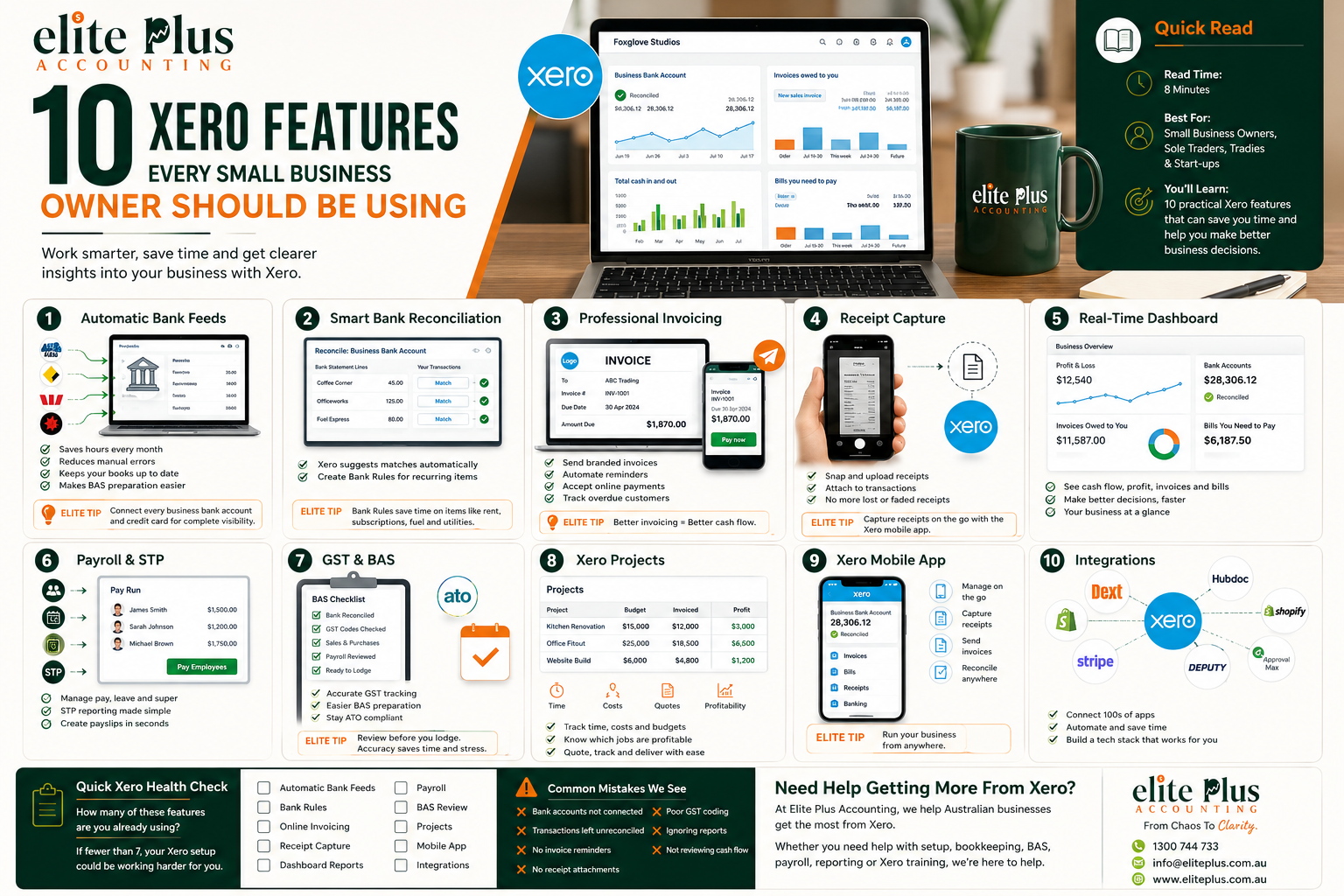
Discover 10 essential Xero features that help small business owners manage finances, save time, track expenses, improve accuracy, and make smarter business decisions with ease.
Read More