
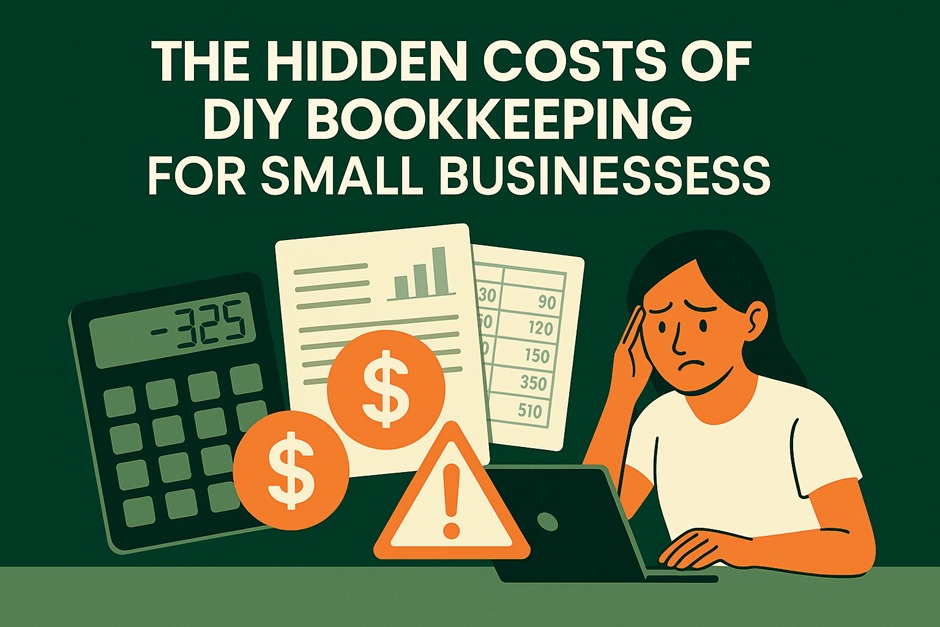
Running a small business is both rewarding and challenging. From acquiring clients to managing staff, operations, and marketing, every decision impacts your growth. One area where many small business owners try to cut costs is bookkeeping. At first glance, managing income and expenses yourself seems simple.
However, DIY bookkeeping can end up costing far more than hiring a professional. In 2025, with closer ATO monitoring, stricter rules, and more demanding financial requirements, poor bookkeeping isn’t just inconvenient; it can quickly put your business at risk.
In this blog, we’ll uncover the hidden costs of DIY bookkeeping, explore the risks it creates for small businesses, and explain why investing in professional support can actually save you time, money, and peace of mind
Why Professional Bookkeeping Is Worth The Investment
Many small business owners wonder if professional bookkeeping is really worth the investment. It’s a common question. Keep reading to uncover the real value it brings and why it can make a big difference.
1. Time You Can’t Afford To Lose
Time is one of the most valuable resources for a small business owner. Every hour spent on DIY bookkeeping is an hour you’re not spending on growing your business, servicing clients, or developing new products.
Studies show small business owners spend 3 to 6 hours per week managing their books. That’s up to 300 hours a year—time that could be better invested in client acquisition, strategic planning, or improving operations.
Even with tools like Xero, MYOB, or QuickBooks, bookkeeping isn’t a simple plug-and-play task. It still requires setup, data entry, and regular monitoring. Without the right know-how, the time you think you’re saving could easily turn into hours spent fixing errors or chasing missing entries.
2. Costly ATO Errors
Australian business owners face strict compliance requirements from the Australian Taxation Office (ATO). Even small bookkeeping mistakes can trigger costly errors, including:
- Incorrect GST coding
- Missed BAS lodgement deadlines
- Errors in PAYG withholding
- Inaccurate superannuation reporting
DIY bookkeeping systems, particularly spreadsheets, lack automated alerts and reconciliation tools, making errors easy to overlook. Even advanced accounting software requires correct setup and oversight.
A single overlooked mistake can lead to audits, penalties, and interest charges, costs that can quickly outweigh any short-term savings from doing it yourself. A professional bookkeeper doesn’t just ensure compliance with ATO standards; they also bring consistency, reliability, and peace of mind that your financial records are always in order.
3. Missed Tax Deductions
One of the biggest hidden costs of DIY bookkeeping is missing eligible business deductions. Professional bookkeepers understand which expenses can be legally claimed under current financial regulations. Many DIY business owners overlook:
- Prepaid expenses
- Asset write-offs
- Home office expenses
- Vehicle and mileage claims
- Depreciation schedules
Missing even a few claims can cost your business thousands each year, unnecessarily increasing expenses. With constantly evolving tax rules, staying on top of allowable deductions is more important than ever.
A skilled bookkeeper can uncover legitimate deductions you might overlook, helping you save money and improve your overall financial efficiency.
4. Cash Flow Blind Spots
Cash flow is the lifeblood of any small business. Without accurate and up-to-date records, your true financial position remains unclear. DIY bookkeeping often misses critical elements, such as:
- Regular bank reconciliations
- Tracking overdue invoices and accounts receivable
- Accurate profit and loss reporting
- Budgeting and forecasting
These blind spots make it harder to make informed decisions, secure funding, or plan for growth. Professional bookkeepers ensure cash flow is visible and actionable, helping you:
- Avoid unexpected shortages
- Manage expenses proactively
- Plan for business expansion with confidence
5. Stress, Burnout, And Mental Load
DIY bookkeeping is not just a financial risk—it’s an emotional burden. Many small business owners experience:
- Late nights chasing invoices
- Anxiety during BAS season
- Worrying about errors
This mental load can lead to burnout, reducing productivity and decision-making ability. Handing your bookkeeping to professionals relieves this stress, allowing you to focus on running and growing your business with peace of mind.
6. When To Call In The Experts
Many business owners hesitate to hire bookkeepers because they assume full-time support is costly. The truth is, you don’t need a full-time bookkeeper to benefit from professional expertise.
Many small businesses work with professionals on a monthly or quarterly basis to:
- Reconcile accounts: Ensure that your financial records match your bank statements to catch errors and maintain accurate books.
- Lodge BAS and payroll: Submit your Business Activity Statements and payroll obligations on time to stay compliant with the ATO.
- Generate detailed financial reports: Provide clear reports like profit & loss and balance sheets to track performance and make informed decisions.
- Advise on cash flow, planning, and compliance: Offer guidance to manage money effectively, plan strategically, and meet regulatory requirements.
- Keep accounting systems up to date: Regularly maintain software and financial processes so your records are accurate and ready for decision-making.
The benefits are clear: fewer errors, better financial clarity, more time for growth, and peace of mind knowing your business is compliant and accurate.
7. Technology Vs. Expertise
While accounting software like Xero, MYOB, and QuickBooks has transformed bookkeeping, technology alone is not enough. Many business owners assume that simply purchasing software guarantees compliance.
Professional bookkeepers not only know how to use these tools effectively but also understand:
- Applying best practices for accurate data entry
- Ensuring proper reconciliation and reliable financial reporting
- Spotting irregularities early to prevent errors or fraud
- Turning financial data into meaningful insights for better decisions
Combining software with professional oversight maximises efficiency and reduces costly mistakes.
8. Long-Term Business Growth
Accurate bookkeeping is not just about compliance—it’s about business intelligence. Professional bookkeeping provides insights into:
- Analysing profit margins across products and services
- Identifying customer payment patterns and habits
- Forecasting cash flow for better financial planning
- Building realistic budgets to support sustainable growth
Without accurate records, decisions are made in the dark. A bookkeeper transforms your financial data into actionable insights, helping you plan strategically and scale your business sustainably.
9. Real-World Cost Comparison
Let’s put it into perspective:
DIY bookkeeping: 5 hours/week × 52 weeks = 260 hours/year. If your time is valued at $50/hour, that’s $13,000 in lost opportunity cost, plus potential penalties and missed deductions.
Professional bookkeeping: Monthly service fees usually range from $200 to $500, giving you accuracy, clarity, and peace of mind, plus potential savings that easily outweigh the cost.
In most cases, hiring a professional bookkeeper is cheaper in the long run and protects your business from financial and legal risks.
Why Professional Accounting Is An Investment, Not A Cost
Professional accounting should be viewed as an investment, not a cost, because it directly contributes to the long-term success, efficiency, and sustainability of a business. A qualified accountant does far more than just record transactions or prepare financial statements — they provide strategic insights that help organisations make informed decisions, control costs, and identify opportunities for growth.
Investing in professional accounting ensures accuracy and compliance with financial regulations, reducing the risk of costly errors, penalties, or fraud. It also helps build credibility with investors, lenders, and other stakeholders who rely on transparent financial information to assess the health and reliability of a business.
Moreover, accountants play a vital role in guiding business strategy and improving performance. They use financial insights to forecast trends, assess opportunities, and make smarter decisions about where to invest time and resources. This forward-looking approach allows businesses to respond effectively to market changes and maintain competitiveness.
Final Thoughts
DIY bookkeeping may look like a smart way to save money, but in reality, it often costs more in time, mistakes, and missed opportunities. From managing cash flow to keeping accurate records, every detail matters. With evolving compliance requirements and limited time, small business owners benefit most when they focus on growth while letting professionals handle the books with precision and care.
At Elite Plus Accounting, we help small businesses stay organised, stress-free, and financially clear. Our team handles bookkeeping, reporting, and year-end preparation, giving you more time to focus on what truly matters: running and growing your business. Reach out to us at info@eliteplusaccounting.com.au or call 1300 744 733 to see how we can support your goals.


Recent Blogs
Choosing between cash and accrual accounting is one of the most important financial decisions for a business. Understanding their benefits, limitations, and suitability for your business can make managing finances simpler and more accurate. Explore how each method works and which one aligns with your business goals.
Read More
Running a business in Australia is rewarding but stressful, especially when it comes to finances. From separating personal and business money to tracking cash flow, small consistent habits can make a big difference. Learn how to stay organised, reduce stress, and gain real peace of mind with these essential financial practices.
Read More
From 1 July 2026, Australian employers must pay superannuation on every payday instead of quarterly. This guide explains how Melbourne businesses can prepare, update payroll systems, verify employee fund details, and follow a practical compliance checklist before the new rules begin.
Read More