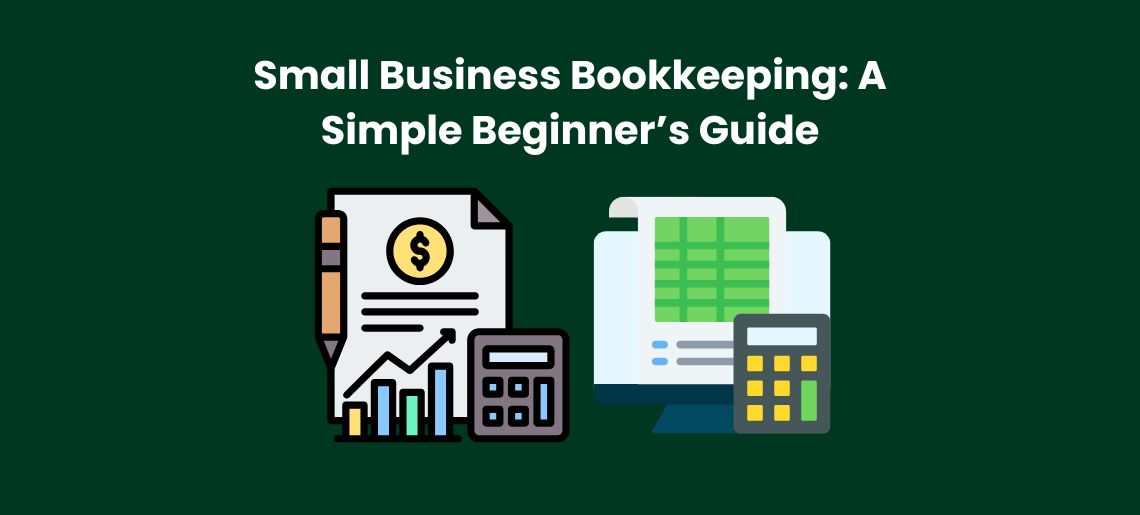
Small Business Bookkeeping: A Simple Beginner’s Guide

Starting and running a small business is exciting, but managing money can feel confusing especially if you have no accounting background. Many business owners struggle with bookkeeping simply because they don’t know where to begin.

This guide is written especially for beginners. It explains small business bookkeeping in a clear and simple way, so you can understand your finances, stay compliant, and make better business decisions. Whether you manage your own books, use small business bookkeeping software, or plan to hire a small business bookkeeper, this guide will help you get started the right way.

What Is Small Business Bookkeeping?

Small business bookkeeping is the process of recording and organising all the money that comes into and goes out of your business. This includes sales, expenses, invoices, payroll, and taxes.

In simple terms, bookkeeping helps you answer questions like:

  • How much money did I earn?
  • What did I spend money on?
  • Am I making a profit?
  • Do my records match my bank account?

Good business bookkeeping forms the base of proper accounting for small business. Without correct records, accounting and tax reporting become difficult and risky.

Why Bookkeeping Is Important for Small Businesses

Many small business owners delay bookkeeping until tax time. This often leads to errors, missed deductions, and unnecessary stress.

Here’s why bookkeeping for small business is so important:

1. Keeps Your Cash Flow Under Control

Bookkeeping helps you see where your money is going so you can plan ahead and avoid cash shortages.

2. Makes Tax Time Easier

Accurate records make GST, BAS, and income tax reporting simple and stress-free.

3. Helps You Make Better Decisions

When your numbers are clear, you can price your services correctly and plan for growth.

4. Saves Time and Reduces Stress

Up-to-date books mean fewer surprises and less last-minute panic.

Bookkeeping for Beginners: What You Need to Track

If you’re new to bookkeeping for beginners, start by tracking these basic items:

Income

Record all money your business earns from sales or services.

Expenses

Track everyday costs like rent, utilities, advertising, fuel, subscriptions, and supplies.

Invoices and Receipts

Always keep proof of every transaction for compliance and future reference.

Bank Transactions

Your bookkeeping records should always match your bank account.

Payroll

If you have employees, payroll, superannuation, and PAYG must be recorded correctly.

How to Do Bookkeeping for a Small Business

Many beginners ask how to do bookkeeping without feeling overwhelmed. The key is to keep it simple and consistent.

Step 1: Separate Business and Personal Finances

Open a business bank account to avoid confusion and mistakes.

Step 2: Choose How You’ll Do Bookkeeping

You can:

  • Use spreadsheets for basic book keeping
  • Use small business bookkeeping software
  • Hire a small business bookkeeping service

Step 3: Update Records Regularly

Weekly updates are easier than fixing months of missing data.

Step 4: Reconcile Your Bank Account

This ensures your records match your actual cash balance.

Step 5: Review Your Numbers

Look at income, expenses, and profit at least once a month.

Manual Bookkeeping vs Bookkeeping Software

Manual book keeping using spreadsheets may work at the start, but it becomes hard to manage as your business grows.

Why Small Business Bookkeeping Software Is Better

  • Automatic bank feeds
  • Fewer errors
  • Real-time reports
  • Easier GST and BAS tracking

This is why many businesses now choose online accounting for small business.

Xero Bookkeeping: A Simple Tool for Small Businesses

Xero bookkeeping is one of the most popular choices in Australia, especially for beginners.

Why Use Xero for Small Business?

  • Easy-to-use dashboard
  • Automatic bank reconciliation
  • Simple invoicing and expense tracking
  • GST and BAS reporting
  • Cloud access anytime, anywhere

Xero for small business makes bookkeeping faster and more accurate.You can read this guide to get more information that why Xero Accounting Software Is The Best Choice For Small Businesses.

How to Use Xero for Bookkeeping

If you’re wondering how to use Xero, here’s a simple overview:

  1. Set up your business details
  2. Connect your bank account
  3. Record income and expenses
  4. Reconcile transactions regularly
  5. Generate reports when needed

Many business owners also choose a Xero bookkeeping course to gain confidence and avoid mistakes.

Is a Xero Bookkeeping Course Worth It?

A Xero bookkeeping training is helpful if you want to:

  • Understand financial reports
  • Use Xero correctly from the start
  • Reduce errors and save time

It’s especially useful for beginners doing bookkeeping for a small business on their own.

Basic Bookkeeping Tips for Small Businesses

Here are some basic bookkeeping for small business tips that work:

  • Update records weekly
  • Keep digital copies of receipts
  • Reconcile bank accounts monthly
  • Review cash flow regularly
  • Get professional advice when needed

Good habits make bookkeeping business tasks much easier.

Should You Hire a Small Business Bookkeeper?

As your business grows, bookkeeping takes more time. Hiring a small business bookkeeper can be a smart decision.

Benefits of a Small Business Bookkeeping Service

  • Accurate and compliant records
  • Less risk of mistakes
  • More time to focus on your business
  • Expert support when rules change

Professional bookkeeping for small businesses saves time and gives peace of mind.

Online Accounting for Small Business: The Modern Way

With cloud tools like Xero, online accounting for small business has become the standard.

Key Benefits:

  • Access your data anytime
  • Secure cloud storage
  • Easy collaboration with your accountant
  • Automatic updates and backups

This approach simplifies bookkeeping for small business and improves accuracy.

Common Bookkeeping Mistakes to Avoid

Beginners often make these mistakes:

  • Mixing personal and business expenses
  • Leaving bookkeeping until tax time
  • Not reconciling bank accounts
  • Missing GST obligations
  • Trying to manage everything alone

Avoiding these mistakes keeps your finances healthy.

When to Get Professional Help

DIY bookkeeping small business works in the early stages, but professional help becomes important when:

  • Transactions increase
  • You hire staff
  • Cash flow becomes complex
  • Compliance requirements grow

Working with experts ensures long-term success.

Take Control of Your Business Finances Today

Bookkeeping doesn’t need to feel stressful or complicated. With the right tools, simple habits, and expert support, any small business owner can stay on top of their finances with confidence.

Whether you manage your own book keeping, use small business bookkeeping software, or want help from a trusted small business bookkeeping service, the most important step is to start and to do it the right way.

Need expert help with bookkeeping or Xero? Get in touch with Elite Plus Accounting today.a

Frequently Asked Questions

What is small business bookkeeping?

Small business bookkeeping is the process of recording income, expenses, invoices, payroll, and other financial transactions to keep business finances organised and accurate.

Yes. All businesses must keep accurate financial records for tax, GST, and compliance purposes. Proper bookkeeping helps meet ATO requirements and avoids penalties.

Yes. Many beginners start by managing their own bookkeeping using simple tools or bookkeeping software. However, professional help is recommended as your business grows.

Xero is one of the most popular small business bookkeeping software options in Australia. It is easy to use, cloud-based, and ideal for beginners.

Xero helps by automatically importing bank transactions, tracking income and expenses, generating reports, and simplifying GST and BAS reporting.

get in touch

Connect with Our Experts

Our dedicated team of accountants and bookkeepers is here to guide you toward the best financial solutions. Reach out today and speak with one of our experienced professionals to get started on the right path.