
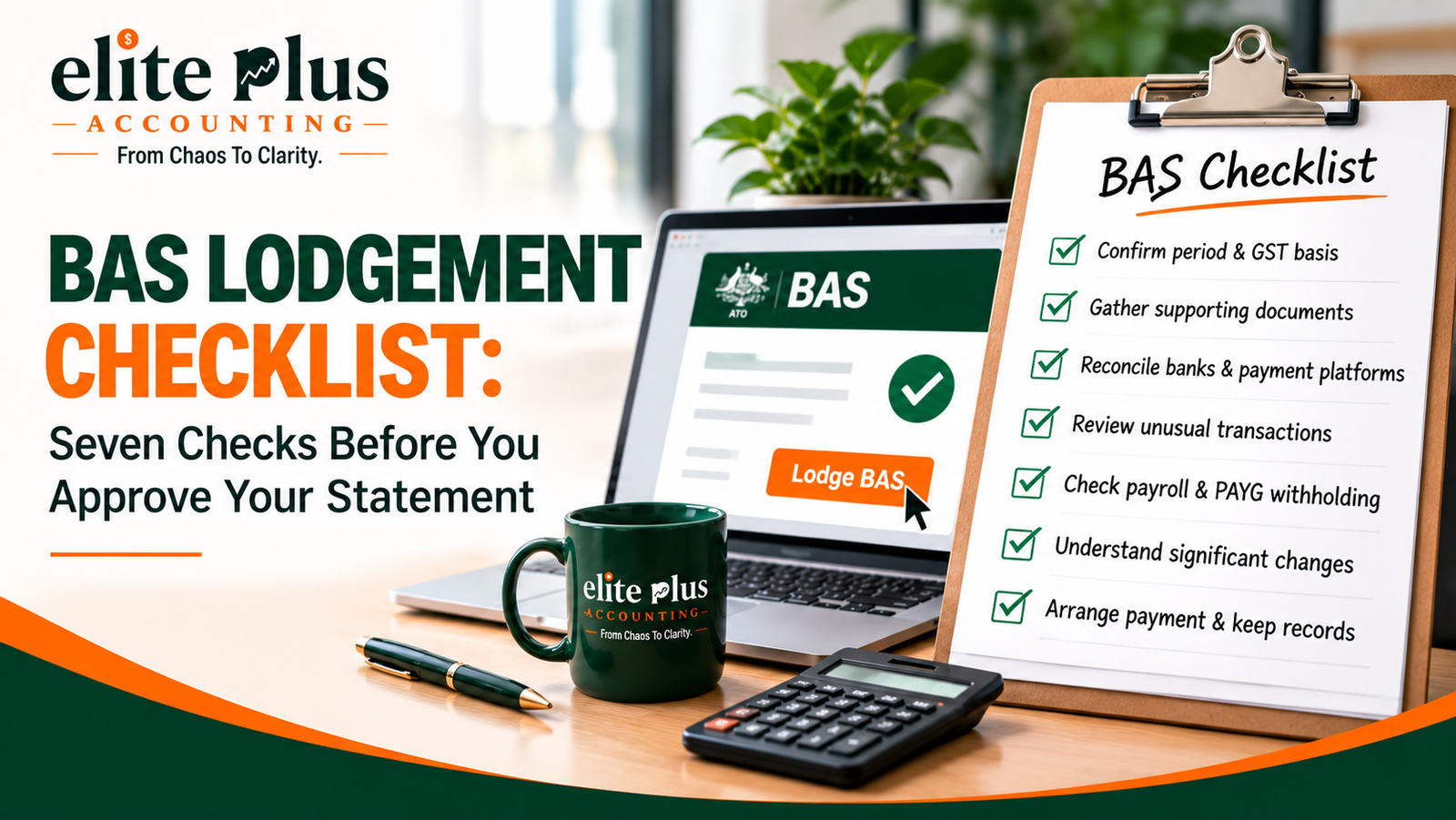
BAS Lodgement Checklist: Seven Checks Before You Approve Your Statement

BAS Lodgement Checklist: Seven Checks Before You Approve Your Statement

Your accounting software has produced a BAS report. The totals look reasonable, and the deadline is approaching. Is it ready to submit? That depends on the records behind it. Missing invoices, incorrect GST codes and unmatched payments can flow into the report without producing an obvious warning.

This BAS lodgement checklist explains what to review, which questions to raise and how to make the final approval more informed.

1. Confirm the period, deadline and reporting basis

Check which period the statement covers and which obligations apply to your business. Also confirm whether you account for GST on a cash or non-cash basis. This affects when transactions are reported:

GST basis General timing
Cash Report according to payments received or made, including relevant part payments.
Non-cash Generally report when an invoice is issued, or any payment occurs, whichever happens first.

GST credits remain subject to eligibility and documentation requirements, and special rules can apply. Your management accounts may use a different basis from your GST reporting.

Do not change report settings simply to make the totals match expectations.

2. Gather documents that explain the transactions

Collect sales invoices, supplier bills, credit notes, receipts and relevant payroll reports. Bank descriptions often provide too little information to establish what was purchased or how it should be treated. A payment to an equipment supplier, for example, could cover equipment, repairs or a deposit.

List missing documents and assign someone to follow them up. Give your adviser enough time to review the information before the applicable deadline.

3. Reconcile banks and payment platforms

Card processors and online platforms may deduct fees or refunds before transferring money to your bank.

Suppose a hypothetical settlement contains:

Component Amount
Customer sales $5,000
Fees withheld $150
Net bank deposit $4,850

The $4,850 deposit should be reconciled to its components. If sales have already been recorded, treating the deposit as another sale could duplicate revenue. This example illustrates reconciliation only. Check the GST treatment of the underlying sales and fees separately.

4. Give unusual transactions a separate review

Flag items that differ from routine trading, including significant assets, overseas purchases, customer deposits, private-use components and large refunds. Provide the supporting invoice and a short explanation. For mixed business and private use, tell your adviser how the purchase is used rather than assuming the full amount qualifies.

A consistent GST code is helpful only when it is appropriate for the transaction.

5. Check payroll figures against supporting records

Where PAYG withholding is relevant, compare the payroll information with the accounting records and investigate differences. Corrections, manual entries and period timing can create discrepancies. Keep explanations for adjustments rather than posting an entry simply to force totals to agree.

Also distinguish reporting from payment. Submitting payroll information does not, by itself, pay the amounts owed.

6. Understand significant changes in the draft

Compare the draft with the previous period and your expectations. Ask why sales, GST amounts or withholding have changed substantially. Increased trading may explain a movement, but so might a large purchase, a duplicated entry, or a timing difference.

The purpose is to identify questions. There is no requirement for this period’s statement to resemble the last one. Before approving it, make sure significant adjustments and unresolved matters have been explained.

7. Arrange payment and retain the approval record

Include the expected payment in your cash forecast and update it when the statement is finalised. Keep the approved statement, supporting working papers and lodgement confirmation together. Record who approved the figures and any follow-up required.

If payment may be difficult, discuss it early with your adviser so you can assess available options.

What if a mistake is discovered afterwards?

Identify what happened, the affected period and the supporting evidence.

The ATO distinguishes errors existing at lodgement from later adjustments. Some GST errors can be corrected on a later BAS when the relevant conditions are met; others require revision of the earlier statement. Ask your adviser to confirm the correct method before making a change.

Make your next BAS easier to prepare

When comparing BAS agents in Melbourne, ask how missing records, transaction queries and approvals are handled. Confirm whether correcting incomplete bookkeeping is included in the scope.

Elite Plus Accounting provides BAS lodgement support. Contact the team to review your preparation process.

Frequently Asked Questions

Can I submit the BAS report generated by my software without checking it?

Review the underlying records first. Software reports depend on accurate transactions, appropriate settings and correct treatment.

No. You still need complete records and visibility over amounts owed. The reporting basis determines timing, not whether you should maintain records.

No. The purchase must meet the relevant requirements. Its nature, business use, documentation and reporting basis can affect the treatment.

No. Conditions apply. Your adviser should assess whether a later correction or revision is appropriate.

Not necessarily. Management reporting may require additional adjustments and reviews for a different purpose.

get in touch

Connect with Our Experts

Our dedicated team of accountants and bookkeepers is here to guide you toward the best financial solutions. Reach out today and speak with one of our experienced professionals to get started on the right path.