
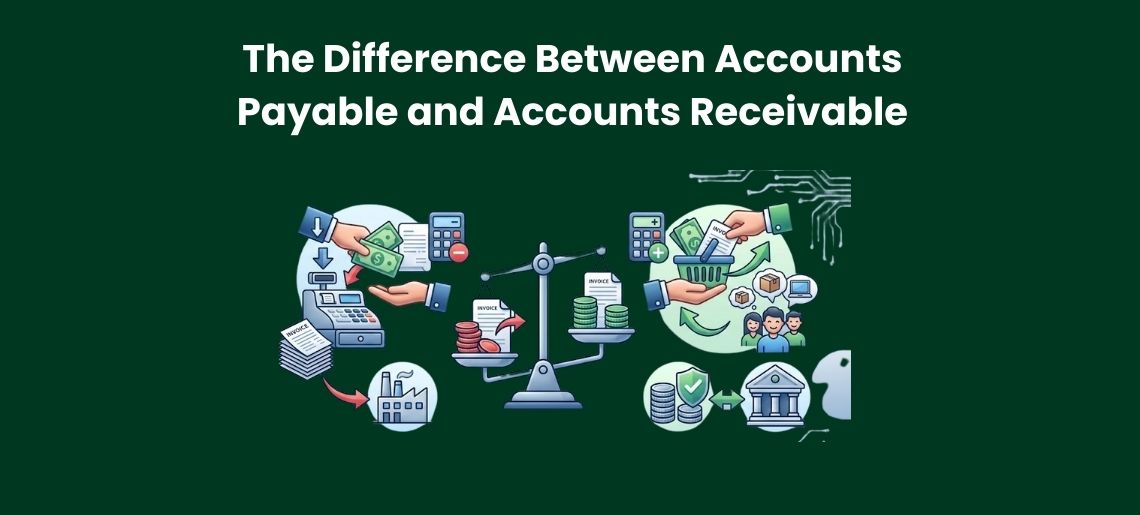
If you run a small business, you have probably heard these two terms a lot. Accounts payable. Accounts receivable. They sound similar. But they mean very different things. Mixing them up can cause real problems. You might think you have more money than you actually do. Or you might miss a payment deadline and damage a supplier relationship you have spent years building. Neither of those things is good for business.
So it is worth taking a few minutes to understand both of these properly. Once you do, managing your finances becomes a lot clearer and a lot less stressful. This guide explains what each term means, how they work in real life, and why keeping track of both is so important for your business.
What Is Accounts Payable?
Accounts payable is money your business owes to others.When you buy something on credit, you do not always pay for it right away. Maybe you order stock from a supplier and they give you 30 days to pay. That amount sits in your accounts payable until you clear it. Think of it like a bill you have received but have not paid yet.Accounts payable sits on the liability side of your balance sheet. That means it is a debt your business is carrying. Until you pay it off, it reduces your net worth on paper.
Common examples of accounts payable:
| Type | Example |
|---|---|
| Supplier invoices | Stock or raw materials ordered on credit |
| Rent | Office, warehouse, or retail space |
| Utilities | Electricity, internet, phone bills |
| Contractor fees | Freelancers or tradespeople you have hired |
| Software subscriptions | Tools billed monthly or annually |
The goal with accounts payable is to know exactly what you owe and to pay it on time. Paying late can lead to penalty fees. It can also damage your relationship with suppliers, which is hard to rebuild once trust is lost. On the flip side, paying too early without good reason can hurt your cash position unnecessarily. Good accounts payable management finds the right balance.
What Is Accounts Receivable?
Accounts receivable is money owed to your business. When you sell a product or service and the customer does not pay straight away, that amount becomes accounts receivable. You have done the work. You have sent the invoice. Now you are waiting for the payment to come in. Think of it as money you are expecting to receive. Accounts receivable sits on the asset side of your balance sheet. It has value because someone legally owes it to you. But until that money actually lands in your bank account, you cannot spend it. It is not real cash yet.
Common examples of accounts receivable:
| Type | Example |
|---|---|
| Client invoices | Work completed but not yet paid for |
| Credit sales | Goods sold to a customer on a payment plan |
| Retainers | Ongoing service fees not yet collected |
| Subscription fees | Monthly charges still outstanding |
| Project or event work | Delivered service, invoice awaiting payment |
The goal with accounts receivable is to collect what you are owed, and to do it as quickly as possible. The longer an invoice stays unpaid, the harder it usually becomes to recover the money. Some unpaid invoices eventually become bad debts, which cost you time, money, and sometimes even legal fees.
Key Differences at a Glance
Here is a simple side-by-side comparison to make the distinction easy to remember.
| Aspect | Bookkeeping | Accounting |
|---|---|---|
| Focus | Recording transactions | Analysing and interpreting data |
| Purpose | Accuracy, organisation | Strategy, growth, forecasting |
| Compliance | BAS, GST, STP | Reporting, tax compliance, regulatory submissions |
| Tools | Xero, MYOB, QuickBooks | Reports, dashboards, forecasting tools |
| Outcome | Organised books | Strategic insights for better decisions |
A quick way to remember it: payable = pay out, receivable = receive in.
Both exist in your business at the same time. While you are waiting on a client to pay you, you are also paying your own invoices. That is completely normal. The key is managing both sides well so neither one gets away from you.
Why Cash Flow Connects the Two
Cash flow is the movement of money in and out of your business. Accounts payable and receivable are both directly tied to it, and the connection between them matters more than most people realise.
Here is the problem many small businesses run into. You might have a healthy amount of accounts receivable on paper. Clients owe you money. But if they have not paid yet, you do not have the cash in hand. And your accounts payable might be due this week. That gap between what you are owed and when you actually receive it can create serious financial pressure. This is one of the most common reasons small businesses struggle, even profitable ones. They are not losing money. They just cannot access it fast enough to cover their obligations.
How each side affects your cash flow:
| Situation | Impact on Cash Flow |
|---|---|
| Clients pay invoices quickly | Positive, more cash available |
| Clients pay invoices late | Negative, cash is tied up |
| You pay suppliers on time | Neutral, trust is maintained |
| You pay suppliers early without reason | Negative, cash leaves too soon |
| You miss a payable deadline | Negative, penalties apply |
| You delay chasing overdue receivables | Negative, debt ages and gets harder to collect |
The sweet spot is when money comes in regularly and goes out in a predictable, manageable way. Getting the timing right between the two is one of the most valuable things you can do for the financial health of your business.
How Accounts Payable Works in Practice
Say you run a small cafe. You order coffee beans from a supplier. They deliver the beans and send you an invoice for $800, due in 30 days. At this point, you have $800 sitting in your accounts payable. You record it as a liability. When you pay the invoice before the due date, you remove it from accounts payable and your bank balance decreases by $800. Clean and simple. But imagine you have 10 different suppliers. Each one sends invoices at different times, with different due dates and different amounts. Keeping track of all of that manually gets messy fast. One missed invoice and you are dealing with a late fee or an awkward phone call.
Good habits for managing accounts payable:
- Record every invoice as soon as you receive it
- Set reminders for due dates so nothing slips through
- Review your payables list regularly to know what is coming up
- Negotiate longer payment terms with suppliers where possible
- Do not pay early unless there is a discount that genuinely makes it worthwhile
- Always check invoices for errors before making a payment
Building these habits into your routine keeps your payables under control and your supplier relationships in good shape.
How Accounts Receivable Works in Practice
Back to that cafe. Now imagine you do catering for a local office. You deliver the food and send an invoice for $1,200, due in 14 days. You now have $1,200 in accounts receivable. You record it as an asset. When the client pays, the money moves into your bank account and the invoice comes off your receivables list. Again, with one client this is straightforward. But with multiple clients on different payment schedules, and some of them paying late, things get complicated quickly. Chasing invoices takes time and energy that most business owners would rather spend elsewhere.
Good habits for managing accounts receivable:
- Send invoices straight away after completing work or delivering goods
- Set clear payment terms upfront so clients know exactly when payment is due
- Follow up on overdue invoices quickly and professionally
- Consider offering small early payment discounts to encourage faster payments
- Use accounting software to track invoice status automatically
- Keep records of all communication with clients about outstanding payments
The faster you get money in the door, the less pressure you feel on the payables side.
Common Mistakes Business Owners Make
Both sides of this are easy to get wrong, especially when you are busy running everything else in the business.
| Mistake | Which Side | Why It Matters |
|---|---|---|
| Forgetting to record an invoice | Payable | You miss the due date and face penalties |
| Paying the wrong amount | Payable | Creates reconciliation headaches |
| Not checking invoices for errors | Payable | You overpay without realising it |
| Delaying sending invoices | Receivable | Clients take even longer to pay |
| Not following up on late payments | Receivable | Debt gets older and harder to recover |
| Unclear payment terms on invoices | Receivable | Clients have no real deadline to meet |
| Offering credit without checking history | Receivable | Risk of non-payment increases significantly |
These mistakes can quietly drain your cash flow over time. They are often hard to trace back to the source until the damage is already done. Staying on top of both sides consistently is the best way to avoid them.
The Role of Bookkeeping and Professional Support
Both accounts payable and accounts receivable are central to how your business runs day to day. Managing them well requires consistent, accurate bookkeeping. Without that foundation, it is very easy for things to fall through the cracks.
A good bookkeeper or accountant will make sure your payables are recorded correctly and cleared on time. They will also help you track your receivables, follow up on overdue invoices, and make sure your records are clean and accurate all year round. For many small business owners, this is one of the first tasks worth handing over to a professional. It saves time, reduces the risk of costly errors, and gives you a much clearer picture of where your business actually stands financially.
Cloud-based accounting tools like Xero or MYOB can also make both sides much easier to manage. They let you see what you owe and what you are owed in real time, send automatic payment reminders, and keep everything in one place. Even if you do use software, having a professional review your books regularly is still a smart move.
Two Sides of the Same Coin
Accounts payable and accounts receivable are two of the most basic parts of running a business. But getting both right makes a real difference. You know what is going out, you know what is coming in, and you can make decisions with confidence instead of guessing. The businesses that stay financially healthy are usually the ones that take both sides seriously and stay on top of them consistently.
If you ever feel like the bookkeeping side of things is getting away from you, the team at Elite Plus Accounting is always happy to help. Sometimes a little support goes a long way.
Frequently Asked Questions
How long should you wait before chasing a late invoice?
Most businesses follow up as soon as the invoice is one day past the due date. A polite reminder email is a good first step. If it stays unpaid for 7 to 14 days, a more direct follow-up is appropriate. Do not wait weeks to act.
Can a business have both accounts payable and receivable at the same time?
Yes, almost every business carries both at once. You might owe money to suppliers while also waiting on payments from clients. Both sit on your books simultaneously and need to be managed together.
Do I need accounting software to manage these?
You do not technically need it, but it makes things significantly easier. Tools like Xero, MYOB, or QuickBooks automate invoice tracking, send payment reminders, and give you a live view of your financial position.
How does accounts payable affect my year-end finances?
Money paid through accounts payable may be deductible as a business expense. The rules around timing and eligibility can be complex, so it is best to work with a qualified accountant to make sure everything is handled correctly.
What is the best way to reduce overdue accounts receivable?
Send invoices promptly, set clear payment terms, follow up quickly when payments are late, and consider using direct debit or automated payment options. The sooner you act on an overdue invoice, the better your chances of collecting in full.
get in touch
Connect with Our Experts
Our dedicated team of accountants and bookkeepers is here to guide you toward the best financial solutions. Reach out today and speak with one of our experienced professionals to get started on the right path.


Recent Blogs

Running a construction business means juggling jobs, materials, and payments. Poor bookkeeping hides where money goes. This guide breaks down job costing, payroll, cash flow, and more for contractors and builders.
Read MoreAccounts payable and accounts receivable are two essential parts of business accounting, but they serve very different roles. This guide explains what each term means, how they impact cash flow, and why understanding the difference helps small businesses manage finances, avoid payment issues, and maintain strong relationships with suppliers and clients.
Read More
Payday Super is one of the biggest payroll changes in decades. This guide helps Melbourne employers understand the new rules and prepare systems, cash flow, and compliance before 1 July 2026.
Read More