
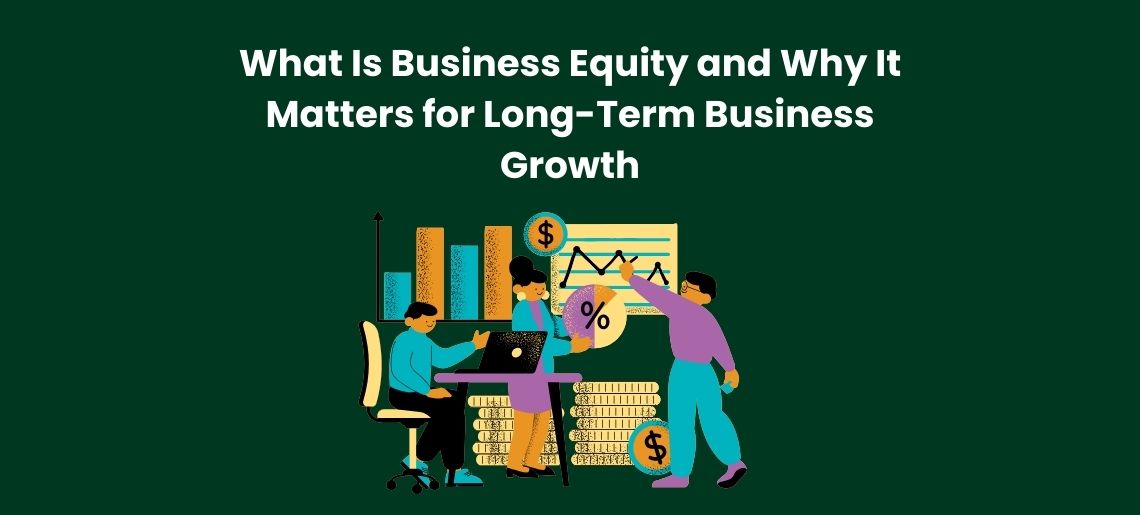
A business can be very profitable but still struggle financially, have cash flow problems or collapse during difficult times. Many business owners focus on heavy sales, revenue and not the actual backbone of a business i.e Business equity. Business equity is what truly shows how strong, stable, and valuable a business is over the long term. It reflects how well a business is built and if it can survive during difficult times.
Understanding business equity helps business owners make better decisions, plan smarter growth strategies, and build businesses that last, not just businesses that earn money in the short term.
Understanding Business Equity
At its simplest level, business equity = assets – liabilities.
This means equity is the portion of the business that truly belongs to the owner or shareholders after all debts and obligations are accounted for.
Assets may include:
- Cash and bank balances
- Equipment and property
- Inventory
- Accounts receivable
- Intellectual property
Liabilities may include:
- Loans and overdrafts
- Creditors and payables
- Lease commitments
Equity is not just a number on a balance sheet; it represents ownership value, financial security, and the business’s ability to grow sustainably.
Why Business Equity Matters For Long Term Growth
1. Financial Stability
Businesses with strong equity have a safety buffer that allows them to survive slow sales periods, economic downturns, unexpected expenses, or market shifts. Strong equity reduces dependence on debt and provides confidence in handling financial challenges, ensuring operations continue smoothly even in uncertain times.
2. Better Access to Funding
Equity is a key indicator for banks, lenders, and investors assessing financial risk. Businesses with strong equity are more likely to secure loans, negotiate better interest rates, attract investors, and gain credibility with stakeholders. It demonstrates financial responsibility and stability, increasing the likelihood of funding approval for growth initiatives.
3. Smarter Business Decisions
Equity allows businesses to plan beyond short-term survival. Companies with strong equity can invest in new opportunities, upgrade technology, hire skilled staff, expand operations, and enter new markets without being constrained by immediate cash needs. It provides freedom to make decisions that align with strategic goals rather than reacting to financial pressure.
4. Higher Business Value
Equity contributes directly to the overall value of the business. This is important when planning for business sales, succession, partnerships, mergers, and acquisitions. Strong equity indicates a healthy, financially robust business, enhancing market credibility and long-term wealth creation. The more equity a business has, the more valuable it becomes for owners and potential investors.
The Connection Between Equity and Business Value
- Higher equity boosts market value: A business with strong equity is more attractive to buyers, partners, and investors because it demonstrates long-term sustainability and financial strength.
- Supports mergers, acquisitions, and partnerships: Companies with solid equity positions can negotiate better terms during acquisitions, mergers, or joint ventures, creating more strategic opportunities.
- Improves funding opportunities: Lenders and investors are more likely to provide funding or invest in businesses with strong equity, as it reduces their financial risk.
- Enables long-term wealth creation: By focusing on building equity, business owners not only secure stability but also create a tangible, growing asset that increases the overall worth of the business over time.
- Transforms profits into value: Equity ensures that earnings are not just short-term gains but are reinvested or retained to grow the business’s true value, supporting sustainable success.
Business Equity vs Profit
While equity and profit are related, they are different concepts. Profit refers to the income a business earns during a specific period, while equity represents the accumulated value of the business over time after liabilities are subtracted from assets. Understanding the difference helps business owners make better financial and strategic decisions.
| Feature | Profit | Equity |
|---|---|---|
| Definition | Income earned during a period | Net value of the business after liabilities are subtracted from assets |
| Time Frame | Short-term | Long-term |
| Reflects | Performance in a period | Overall financial health and ownership value |
| Fluctuation | Can vary month to month | Grows steadily with retained earnings and debt reduction |
| Purpose | Shows earnings | Shows stability, value, and growth potential |
How Business Equity Is Built Over Time
Business equity does not grow by accident. It grows through consistent financial discipline and smart management.
- Consistent Profitability: Profits that are reinvested into the business increase equity over time. By retaining earnings instead of withdrawing them, the business builds a stronger internal financial foundation that can be used for growth, investment, or as a buffer during slower periods.
- Good Debt Management: Reducing unnecessary debt improves equity and financial stability. Paying down loans and liabilities not only lowers financial risk but also increases the net value of the business, making it more resilient during economic fluctuations.
- Asset Growth: Investing in valuable assets such as technology, systems, property, infrastructure, and intellectual property builds both business value and equity. These assets enhance operational efficiency, generate future revenue, and strengthen the overall financial position of the company.
- Cash Flow Control: Strong cash flow management prevents financial pressure and supports equity growth. By ensuring timely collections, managing payables effectively, and maintaining liquidity, businesses can meet obligations without relying heavily on external funding.
- Financial Discipline: Clear reporting, budgeting, forecasting, and financial controls protect and strengthen equity. Disciplined financial practices help track performance, identify opportunities for improvement, and maintain long-term stability, ensuring that growth is sustainable rather than risky.
Equity and Small Businesses: Why It Matters More
Equity is not just for large corporations; small businesses benefit even more from building a strong equity position. For smaller companies, every financial decision has a greater impact on stability, growth, and long-term success.
Strong equity helps small business owners navigate cash flow fluctuations, survive slow periods, and respond to unexpected expenses without relying too heavily on loans. It also provides the foundation needed to reinvest in the business, whether through hiring staff, upgrading technology, or expanding operations.
Moreover, businesses with solid equity are better positioned to attract investors, secure funding, and plan for the future. By focusing on equity early, small business owners create long-term value that supports sustainable growth, operational resilience, and future opportunities, turning their company into a stable and investable asset.
How Equity Supports Sustainable Growth
- Controlled Expansion: Strong equity allows businesses to grow without over-relying on external funding. Companies can confidently enter new markets, launch products, or invest in technology, knowing they have the financial resources to support these initiatives.
- Better Cash Flow Management: Equity provides a financial buffer that smooths out seasonal fluctuations and covers unexpected expenses. This stability ensures operations can continue uninterrupted during slower periods, reducing stress on daily business activities.
- Empowered Strategic Decision-Making: With strong equity, businesses are not forced to make decisions based solely on immediate cash needs. Owners and managers can prioritize long-term growth, take calculated risks, and invest in initiatives that offer higher returns over time.
- Financial Resilience: Equity gives businesses the freedom to focus on sustainable growth rather than short-term survival. It provides the resilience to navigate challenges, capitalize on opportunities, and pursue long-term success with confidence.
- Investment in Future Opportunities: Having equity means businesses can seize growth opportunities, hire the right talent, and upgrade systems or infrastructure, all of which support continued expansion and higher business value.
Building Long-Term Success Through Equity
Business equity is the foundation that transforms a business from simply earning profits into creating long-term value. It provides financial stability, enables smarter decision-making, supports sustainable growth, and increases the overall worth of the company. Without strong equity, even profitable businesses can struggle during challenges or miss opportunities for expansion.
By focusing on building and maintaining equity through consistent profitability, disciplined financial management, debt reduction, and strategic reinvestment, business owners can secure their company’s future. Strong equity not only protects against risk but also empowers businesses to grow confidently, attract investors, and create lasting wealth. Ultimately, equity is the key to turning short-term gains into long-term success.
Frequently Asked Questions
What is business equity?
Business equity is the value of a business after all liabilities are subtracted from assets. It represents what the owner truly owns and the financial strength of the business.
How does equity differ from profit?
Profit is the income earned in a specific period, while equity reflects the accumulated value of the business over time, after liabilities are accounted for.
How can I build business equity?
Equity grows through consistent profitability, reducing debt, acquiring valuable assets, reinvesting in the business, and maintaining strong financial discipline.
Can small businesses benefit from building equity?
Absolutely. Equity helps small businesses survive cash flow fluctuations, reinvest in growth, and create long-term stability and value.
What is the difference between owner’s equity and retained earnings?
Owner’s equity reflects the total ownership stake in the business, while retained earnings are profits reinvested into the business to build equity.
get in touch
Connect with Our Experts
Our dedicated team of accountants and bookkeepers is here to guide you toward the best financial solutions. Reach out today and speak with one of our experienced professionals to get started on the right path.


Recent Blogs

A common assumption among Australian business owners is: “They have an ABN and send me an invoice, so they are responsible for their own super.” Unfortunately, it is not always that simple. For super guarantee purposes, the ATO looks at the substance of the arrangement. Some independent contractors must still receive super where the contract is wholly […]
Read More
Working two jobs in Australia can affect how much tax is withheld from your pay. Learn how the $18,200 tax-free threshold works, when to claim it, and how claiming it from multiple employers could lead to an unexpected tax bill.
Read More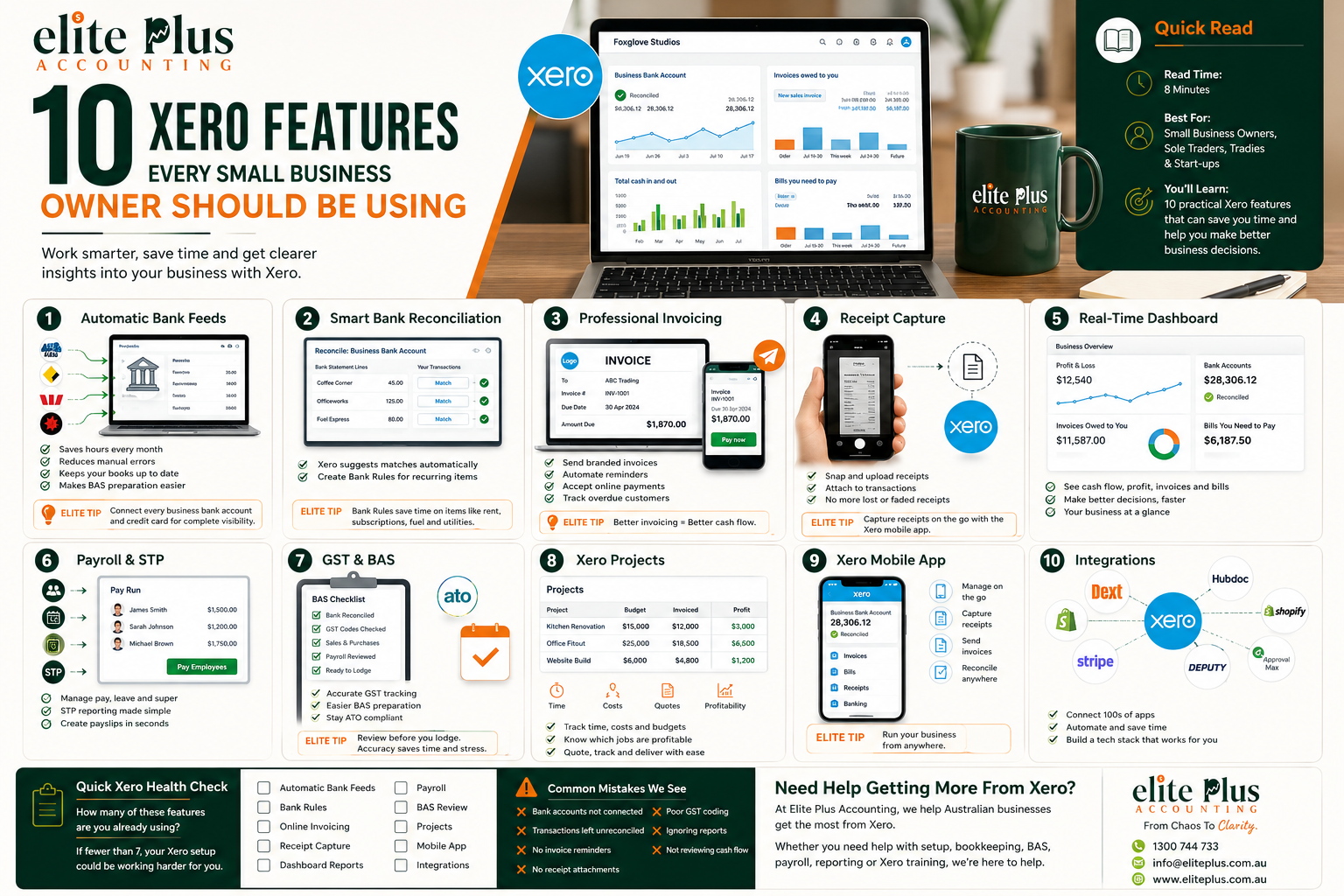
Discover 10 essential Xero features that help small business owners manage finances, save time, track expenses, improve accuracy, and make smarter business decisions with ease.
Read More